
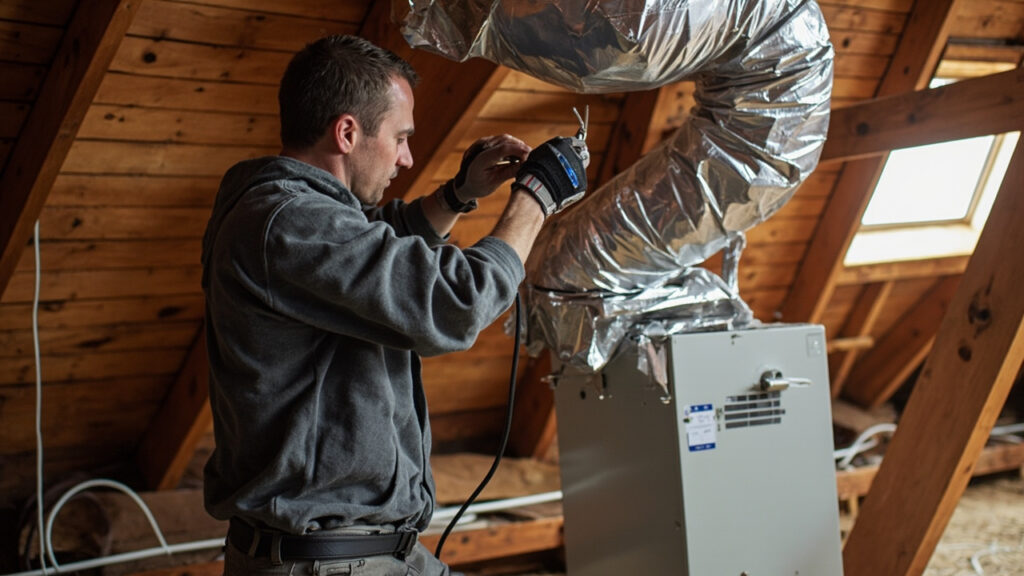
Is an Attic AC Unit the Best Cooling Option for Your Washington Heights Home?
Washington Heights homes built in the early 1900s often struggle with uneven cooling. Upper floors trap heat while lower levels stay comfortable. An attic air conditioning system can solve this problem by delivering cool air directly where it’s needed most.. Read more about How Proper Attic Insulation and Ventilation Protect Your Oak Creek HVAC.
Milwaukee’s climate makes this decision even more important. Our humid summers push attic temperatures above 130°F. Without proper cooling, your second floor becomes unbearable. The right attic AC system can cut your energy bills by 30% while making every room comfortable.. Read more about Why You Might Need a High Velocity HVAC System for Your Historic Home in Brewer’s Hill.
Before you decide, you need to understand your options. Not every attic works for every system. Your home’s age, insulation, and existing ductwork all matter. Let’s explore what makes attic AC installation successful in Washington Heights.
Why Washington Heights Homes Need Special Cooling Solutions
Washington Heights features classic Milwaukee architecture. Many homes are over 100 years old with balloon framing and minimal attic insulation. These design features create unique cooling challenges that modern systems must address.
The neighborhood sits on Milwaukee’s west side near Washington Park. Homes here typically have narrow lots and shared walls in some areas. This means your cooling solution affects not just comfort but also energy efficiency and even your neighbor’s experience.
Milwaukee’s humid continental climate hits Washington Heights hard. Summer dew points often exceed 70°F. Your attic becomes a heat trap that radiates warmth into living spaces below. A properly sized attic AC system must handle both temperature and humidity control.
Types of Attic Air Conditioning Systems for Milwaukee Homes
Choosing the right system depends on your home’s layout and your cooling needs. Each option offers different benefits for Washington Heights’ unique housing stock.
Ductless Mini-Split Systems
Ductless mini-splits work exceptionally well in older homes. They require no existing ductwork and install with minimal disruption. The indoor unit mounts high on a wall while the outdoor compressor sits outside.
These systems offer zoned cooling. You can cool specific rooms without wasting energy on unused spaces. For Washington Heights homes with multiple bedrooms, this means each family member controls their comfort level.
Installation takes 1-2 days. Technicians mount the indoor unit, run refrigerant lines through a small wall hole, and connect the outdoor unit. No major construction needed.
High-Velocity HVAC Systems
High-velocity systems use small flexible ducts that fit in tight spaces. They work perfectly for Washington Heights homes where traditional ductwork won’t fit between walls and floors.
These systems move air at high speed through 2-3 inch ducts. The result is rapid cooling without the bulky vents of conventional systems. Outlets can be placed in ceilings, walls, or floors based on your home’s layout.
Installation requires more planning than mini-splits but less than traditional central air. The small ducts weave through existing cavities without major demolition.
Traditional Central Air with New Ductwork
Adding central air to an older home requires careful planning. Your attic must have enough space for the air handler and proper support for new ductwork.
This option provides whole-house cooling with consistent temperatures. However, installation can take 3-5 days and may require opening walls or ceilings to run ducts.
Washington Heights homes often need custom duct solutions. Your installer must work around original woodwork and preserve historic details while ensuring proper airflow.
Key Factors for Successful Attic AC Installation
Several elements determine whether your attic AC system will perform well. Understanding these factors helps you make informed decisions.
Attic Insulation Requirements
Wisconsin building codes require R-49 to R-60 insulation in attics. Many Washington Heights homes have only R-19 or less. Adding proper insulation before AC installation improves system efficiency by 20-30%.
Attic insulation prevents heat transfer between your living space and the outdoors. In summer, it keeps hot air out. In winter, it retains warmth. This year-round benefit makes your entire HVAC system more effective.
Common insulation types include blown-in cellulose, fiberglass batts, and spray foam. Your choice depends on your budget, existing attic conditions, and whether you need air sealing.
Structural Load Considerations
Air handlers and ductwork add significant weight to your attic. Most Washington Heights homes built before 1940 need structural assessment before installation. The existing ceiling joists may not support modern HVAC equipment.
Engineers calculate load requirements based on equipment weight, snow loads, and local building codes. Reinforcement might involve adding support beams or sistering joists to distribute weight properly.
Skipping this step risks ceiling collapse or equipment failure. Always get a structural assessment from a qualified professional before proceeding.
Condensate Drainage Solutions
Air conditioning produces condensation that must drain properly. In attics, this becomes more complex than basement installations. Poor drainage leads to water damage, mold growth, and system failure.
Primary drainage uses gravity to carry water outside. Secondary systems include condensate pumps for situations where gravity drainage isn’t possible. Some installations use auxiliary drain pans with overflow switches that shut down the system if primary drainage fails.
Milwaukee’s freeze-thaw cycles require special attention. Drain lines must be properly insulated and sloped to prevent freezing during winter months.
Ventilation and Air Sealing
Attics need proper ventilation to prevent moisture buildup and heat accumulation. Your AC installation should work with existing ventilation or include upgrades where needed.
Air sealing prevents conditioned air from escaping through gaps around ducts, wiring, and plumbing penetrations. This step alone can reduce cooling costs by 15% in older homes.
Common sealing methods include spray foam, caulk, and weatherstripping. The goal is creating an airtight barrier between your conditioned space and the unconditioned attic.
Energy Efficiency and Cost Considerations
Modern AC systems offer significant efficiency improvements over older equipment. Understanding efficiency ratings helps you choose the right system for your budget and comfort needs.
SEER2 Ratings Explained
SEER2 (Seasonal Energy Efficiency Ratio 2) measures cooling efficiency. Higher numbers mean lower operating costs. Current minimum efficiency is 14 SEER2, but systems range from 14 to 26+ SEER2.
For Washington Heights homes, 16-18 SEER2 often provides the best balance of upfront cost and long-term savings. Higher efficiency systems cost more initially but can reduce monthly bills by 30-50% compared to older units.
SEER2 accounts for real-world conditions including humidity and part-load operation. This makes it more accurate than the older SEER rating system for Milwaukee’s climate.
Focus on Energy Rebates
Wisconsin’s Focus on Energy program offers rebates for high-efficiency HVAC equipment. These rebates can reduce installation costs by $300-$1,500 depending on the system’s efficiency rating.
Qualifying equipment must meet specific efficiency standards. Your contractor should handle rebate paperwork and ensure your chosen system qualifies before installation begins.
Federal tax credits may also apply to high-efficiency systems installed in 2026. These credits can provide additional savings of up to 30% of the equipment cost.
Installation Timeline and Process
Understanding the installation process helps you prepare your home and family for the disruption. Each system type follows a similar overall process with different specific steps.
Pre-Installation Assessment
Professional installers begin with a comprehensive home evaluation. They measure your home’s square footage, assess existing insulation, and calculate cooling loads using Manual J procedures.
This assessment identifies potential challenges like inadequate electrical service, structural limitations, or moisture problems. It also determines the proper equipment size to ensure efficient operation.
Most assessments take 1-2 hours and include a detailed proposal with equipment options, costs, and timeline estimates.
Installation Steps
The installation process varies by system type but generally follows these steps:
- Preparation and Protection
Installers protect floors and furniture with drop cloths and plastic sheeting. They establish work zones and bring equipment into your home.
- Structural Modifications
For traditional systems, this includes reinforcing attic floors, creating access panels, and preparing mounting locations for air handlers.
- Equipment Installation
Air handlers, condensers, and ductwork or refrigerant lines install according to manufacturer specifications and local codes.
- Electrical Connections
Licensed electricians connect new equipment to your home’s electrical system, potentially upgrading your panel if needed.
- Testing and Commissioning
Technicians test system operation, check for leaks, verify airflow, and calibrate controls for optimal performance.
- Cleanup and Final Walkthrough
The work area gets cleaned, equipment gets explained to homeowners, and final adjustments ensure everything works properly.
Comparing System Types: Cost and Performance
Different systems offer varying benefits and costs. Here’s how they compare for Washington Heights homes:
| System Type | Installation Cost Range | Typical Lifespan | Best For |
|---|---|---|---|
| Ductless Mini-Split | $4,500 – $8,000 | 15-20 years | Room additions, specific zone cooling |
| High-Velocity | $8,000 – $12,000 | 20-25 years | Whole-house cooling in tight spaces |
| Traditional Central Air | $10,000 – $15,000 | 15-20 years | Comprehensive whole-house solution |
Costs vary based on home size, equipment efficiency, and installation complexity. Mini-splits offer the lowest initial cost but may require multiple units for whole-house cooling.
High-velocity systems provide excellent comfort but cost more upfront. Their small ducts minimize structural modifications, making them ideal for historic homes.
Traditional systems offer the most comprehensive solution but require the most extensive installation work. They work best when you’re already planning major renovations.
Common Installation Challenges in Washington Heights
Washington Heights’ historic homes present specific challenges that experienced installers must address. Knowing these issues helps you ask the right questions during planning.
Limited Attic Access
Many older homes have small attic access points. Standard equipment may not fit through existing openings. Installers might need to create larger access or use smaller equipment designed for tight spaces.
Some homes require temporary removal of closet walls or ceiling sections to install equipment. Experienced contractors plan these modifications to minimize visible impact.
Existing Knob-and-Tube Wiring
Homes built before 1950 often contain knob-and-tube electrical wiring. This outdated system cannot support modern HVAC equipment and must be replaced before installation.
Electrical upgrades add $2,000 – $5,000 to project costs but are necessary for safety and code compliance. Some homeowners combine this work with other electrical improvements to maximize efficiency.
Historic Preservation Requirements
Washington Heights lies within Milwaukee’s historic preservation guidelines. Exterior modifications may require approval from the Historic Preservation Commission.
Condenser units must be placed discreetly, and any visible changes should maintain the home’s historic character. Experienced installers understand these requirements and can suggest compliant solutions.
Maintenance Requirements for Attic Systems
Proper maintenance ensures your attic AC system operates efficiently for its full lifespan. Different systems have specific maintenance needs.
Annual Professional Service
Professional maintenance includes checking refrigerant levels, cleaning coils, inspecting electrical connections, and testing system performance. This service prevents breakdowns and maintains efficiency.
Milwaukee’s humid climate requires more frequent filter changes than drier regions. Plan to replace filters every 1-3 months depending on your system and household conditions.
Seasonal Preparation
Before summer, clear attic vents of debris and ensure insulation hasn’t shifted. Check that condensate drain lines flow freely and that outdoor units have proper clearance.
Fall maintenance includes cleaning outdoor coils, checking for rodent damage, and preparing heat pump systems for winter operation if applicable.
Frequently Asked Questions
Will an attic AC unit leak through my ceiling?
Modern systems include multiple leak prevention features. Primary condensate drains carry water outside, while secondary drains or overflow switches shut down the system if problems occur. Proper installation and regular maintenance prevent leaks.
How long does attic AC installation take?
Installation time varies by system type. Mini-splits typically complete in 1-2 days. High-velocity systems need 2-3 days. Traditional central air installations require 3-5 days including structural modifications and ductwork.
Do I need to upgrade my electrical panel?
Many older Washington Heights homes have 60-100 amp service insufficient for modern HVAC. Your installer will assess your electrical capacity during the initial evaluation. Upgrades cost $2,000 – $4,000 but are often necessary for safety and code compliance.
Can I install AC in a home without ductwork?
Yes. Ductless mini-splits and high-velocity systems both work without existing ductwork. Mini-splits are easiest for single rooms or additions. High-velocity systems provide whole-house cooling with minimal structural impact.
What’s the best system for a 1,500 square foot home?
For most Washington Heights homes of this size, a 2.5-ton high-velocity system or multiple mini-split heads provide optimal comfort. The best choice depends on your home’s layout, insulation levels, and budget.
Making Your Decision
Choosing the right attic AC system requires balancing comfort needs, budget constraints, and your home’s specific characteristics. Start by getting professional assessments from qualified HVAC contractors familiar with Washington Heights homes.
Ask about their experience with historic homes, request references from similar projects, and ensure they handle permitting and inspections. The cheapest option often costs more long-term through higher energy bills and frequent repairs.
Consider your long-term plans. If you’ll stay in your home for 5+ years, investing in higher efficiency equipment pays off through lower utility bills and improved comfort.
Washington Heights’ unique housing stock deserves cooling solutions that respect its character while providing modern comfort. The right system will keep your home comfortable for decades while preserving its historic charm.
Ready to explore your attic AC options? Contact our team for a free assessment of your Washington Heights home. We’ll evaluate your specific needs and recommend solutions that fit your budget and comfort requirements.
You may also find this helpful. Comparing Trane and Lennox AC Units for the Humid Milwaukee Summers.
{
“@context”: “https://schema.org”,
“@type”: “BlogPosting”,
“headline”: “Is an Attic AC Unit the Best Cooling Option for Your Washington Heights Home?”,
“description”: “Discover if attic AC installation is right for your Washington Heights home. Learn about space-saving options, energy efficiency, and local Milwaukee HVAC solutions.”,
“wordCount”: 2150,
“datePublished”: “2026-04-05T07:28:00.000Z”,
“dateModified”: “2026-04-05T07:28:00.000Z”,
“inLanguage”: “en-US”,
“mainEntityOfPage”: {
“@type”: “WebPage”,
“@id”: “https://eliteheatingandcoolingmilwaukee.com”
},
“publisher”: {
“@type”: “LocalBusiness”,
“name”: “Elite Heating and Cooling Milwaukee”,
“url”: “https://eliteheatingandcoolingmilwaukee.com”
},
“author”: {
“@type”: “Organization”,
“name”: “Elite Heating and Cooling Milwaukee”,
“url”: “https://eliteheatingandcoolingmilwaukee.com”
},
“image”: {
“@type”: “ImageObject”,
“url”: “https://eliteheatingandcoolingmilwaukee.com/wp-content/uploads/2026/03/is-an-attic-ac-unit-the-best-cooling-option-for-yo-1.jpg”
}
}
{
“@context”: “https://schema.org”,
“@type”: “HVACBusiness”,
“name”: “Elite Heating and Cooling Milwaukee”,
“url”: “https://eliteheatingandcoolingmilwaukee.com”,
“address”: {
“@type”: “PostalAddress”,
“addressLocality”: “Milwaukee”
},
“areaServed”: {
“@type”: “City”,
“name”: “Milwaukee”
}
}
{
“@context”: “https://schema.org”,
“@type”: “FAQPage”,
“mainEntity”: [
{
“@type”: “Question”,
“name”: “Will an attic AC unit leak through my ceiling?”,
“acceptedAnswer”: {
“@type”: “Answer”,
“text”: “Modern systems include multiple leak prevention features. Primary condensate drains carry water outside, while secondary drains or overflow switches shut down the system if problems occur. Proper installation and regular maintenance prevent leaks.”
}
},
{
“@type”: “Question”,
“name”: “How long does attic AC installation take?”,
“acceptedAnswer”: {
“@type”: “Answer”,
“text”: “Installation time varies by system type. Mini-splits typically complete in 1-2 days. High-velocity systems need 2-3 days. Traditional central air installations require 3-5 days including structural modifications and ductwork.”
}
},
{
“@type”: “Question”,
“name”: “Do I need to upgrade my electrical panel?”,
“acceptedAnswer”: {
“@type”: “Answer”,
“text”: “Many older Washington Heights homes have 60-100 amp service insufficient for modern HVAC. Your installer will assess your electrical capacity during the initial evaluation. Upgrades cost $2,000 – $4,000 but are often necessary for safety and code compliance.”
}
},
{
“@type”: “Question”,
“name”: “Can I install AC in a home without ductwork?”,
“acceptedAnswer”: {
“@type”: “Answer”,
“text”: “Yes. Ductless mini-splits and high-velocity systems both work without existing ductwork. Mini-splits are easiest for single rooms or additions. High-velocity systems provide whole-house cooling with minimal structural impact.”
}
},
{
“@type”: “Question”,
“name”: “What’s the best system for a 1,500 square foot home?”,
“acceptedAnswer”: {
“@type”: “Answer”,
“text”: “For most Washington Heights homes of this size, a 2.5-ton high-velocity system or multiple mini-split heads provide optimal comfort. The best choice depends on your home’s layout, insulation levels, and budget.”
}
}
]
}
{
“@context”: “https://schema.org”,
“@type”: “HowTo”,
“name”: “Attic AC Installation Process”,
“step”: [
{
“@type”: “HowToStep”,
“position”: 1,
“name”: “Preparation and Protection”,
“text”: “Installers protect floors and furniture with drop cloths and plastic sheeting. They establish work zones and bring equipment into your home.”
},
{
“@type”: “HowToStep”,
“position”: 2,
“name”: “Structural Modifications”,
“text”: “For traditional systems, this includes reinforcing attic floors, creating access panels, and preparing mounting locations for air handlers.”
},
{
“@type”: “HowToStep”,
“position”: 3,
“name”: “Equipment Installation”,
“text”: “Air handlers, condensers, and ductwork or refrigerant lines install according to manufacturer specifications and local codes.”
},
{
“@type”: “HowToStep”,
“position”: 4,
“name”: “Electrical Connections”,
“text”: “Licensed electricians connect new equipment to your home’s electrical system, potentially upgrading your panel if needed.”
},
{
“@type”: “HowToStep”,
“position”: 5,
“name”: “Testing and Commissioning”,
“text”: “Technicians test system operation, check for leaks, verify airflow, and calibrate controls for optimal performance.”
},
{
“@type”: “HowToStep”,
“position”: 6,
“name”: “Cleanup and Final Walkthrough”,
“text”: “The work area gets cleaned, equipment gets explained to homeowners, and final adjustments ensure everything works properly.”
}
],
“image”: “https://eliteheatingandcoolingmilwaukee.com/wp-content/uploads/2026/03/is-an-attic-ac-unit-the-best-cooling-option-for-yo-1.jpg”
}
{
“@context”: “https://schema.org”,
“@type”: “BreadcrumbList”,
“itemListElement”: [
{
“@type”: “ListItem”,
“position”: 1,
“name”: “Home”,
“item”: “https://eliteheatingandcoolingmilwaukee.com”
},
{
“@type”: “ListItem”,
“position”: 2,
“name”: “Blog”,
“item”: “https://eliteheatingandcoolingmilwaukee.com/blog”
},
{
“@type”: “ListItem”,
“position”: 3,
“name”: “Is an Attic AC Unit the Best Cooling Option for Your Washington Heights Home?”
}
]
}
{
“@context”: “https://schema.org”,
“@type”: “Service”,
“serviceType”: “HVAC”,
“provider”: {
“@type”: “LocalBusiness”,
“name”: “Elite Heating and Cooling Milwaukee”,
“url”: “https://eliteheatingandcoolingmilwaukee.com”
},
“areaServed”: {
“@type”: “City”,
“name”: “Milwaukee”
},
“description”: “Discover if attic AC installation is right for your Washington Heights home. Learn about space-saving options, energy efficiency, and local Milwaukee HVAC solutions.”
}