
Can Your Existing Ductwork Actually Handle a Modern High Efficiency AC Unit?
Milwaukee homeowners face a unique challenge when upgrading to modern high-efficiency air conditioning systems. The beautiful Cream City brick homes and classic bungalows that define neighborhoods like Washington Heights and Wauwatosa were built decades before today’s SEER2 standards existed. When you install a new high-efficiency AC unit in an older Milwaukee home, you might be setting yourself up for performance problems if your existing ductwork cannot deliver the proper airflow. Air Conditioning Contractors of America.
Modern high-efficiency air conditioners require significantly different airflow characteristics than the systems installed 20 or 30 years ago. The shift from R-22 refrigerant to R-410A and R-454B means new compressors operate at higher pressures and need precise airflow to function correctly. Variable-speed blowers in today’s units can adjust their output, but they still need properly sized ducts to deliver the cooling your home requires.. Read more about Why a Communicating HVAC System Is the Next Level of Comfort for Bayside Luxury Homes.
The problem becomes especially acute in Milwaukee’s historic districts where ductwork was often installed as an afterthought. Many older homes have undersized return air drops, inadequate supply registers, or ducts that have become compressed or damaged over decades of use. These issues don’t just affect comfort; they can shorten your new AC unit’s lifespan by 30-50% and void manufacturer warranties.
Why Your Old Ductwork Might Not Handle a New AC
The fundamental issue lies in the physics of airflow. Modern high-efficiency units typically require 400 cubic feet per minute (CFM) of airflow per ton of cooling capacity. A 3-ton system needs 1,200 CFM to operate at peak efficiency. Many older Milwaukee homes were designed for 350 CFM per ton or less, creating a 12-15% airflow deficit right from the start.. Read more about Finding the Quietest AC Units for Small Lots in Neighborhoods Like Bay View and Riverwest.
Static pressure becomes the hidden enemy in this scenario. Your ductwork creates resistance to airflow, measured in inches of water column (IWC). Modern high-efficiency systems are designed to operate at 0.5 IWC or less. However, older duct systems often measure 0.8 to 1.2 IWC due to restrictions, leaks, and improper sizing. This increased resistance forces your AC’s blower to work harder, reducing efficiency and increasing energy consumption.
The transition to variable-speed technology in modern units makes this problem more complex. These intelligent systems can adjust their output to compensate for duct restrictions, but they cannot overcome fundamental sizing issues. When a variable-speed blower encounters excessive static pressure, it may run continuously at high speed trying to meet the thermostat’s demands, leading to premature motor failure.
Critical Factors: Static Pressure and CFM
Understanding the relationship between static pressure and airflow is essential for Milwaukee homeowners considering AC upgrades. The chart below shows how duct diameter affects airflow capacity for typical residential applications.. Read more about The Essential HVAC Checklist Every New Homebuyer in Waukesha Should Use.
| Duct Diameter | Maximum CFM (Flexible) | Maximum CFM (Rigid) | Recommended for |
|---|---|---|---|
| 6 inches | 100 | 120 | Small bedrooms |
| 7 inches | 150 | 180 | Medium rooms |
| 8 inches | 200 | 240 | Large living areas |
| 9 inches | 250 | 300 | Open floor plans |
| 10 inches | 300 | 360 | Whole-house returns |
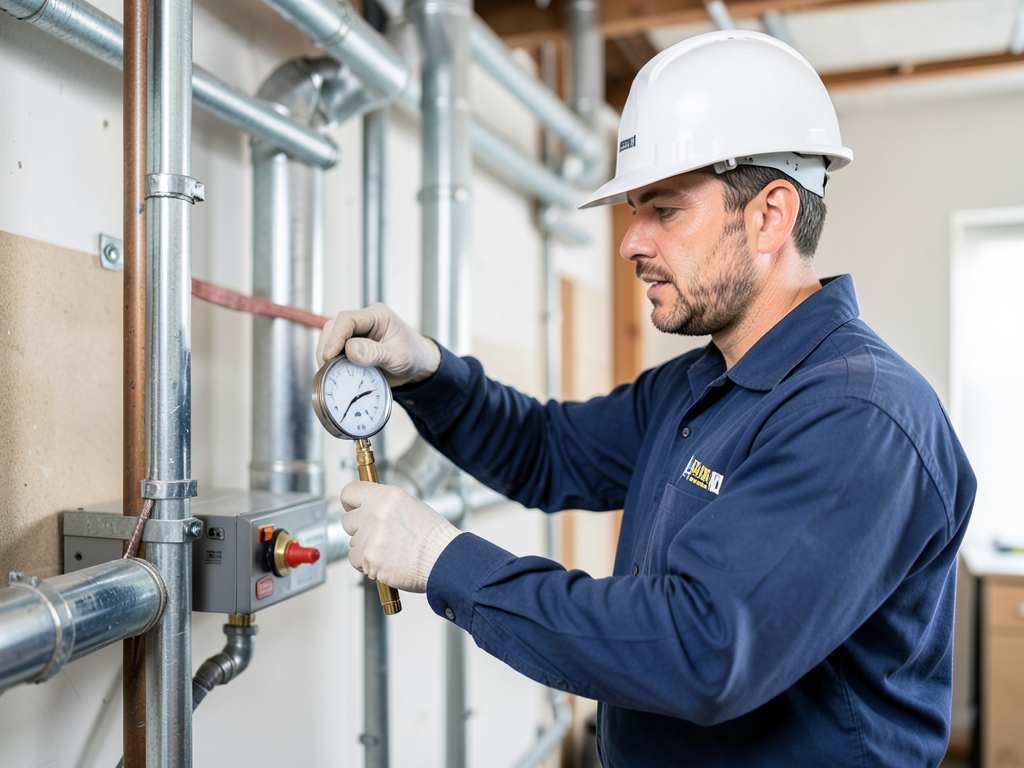
Static pressure testing reveals the true health of your duct system. A professional HVAC technician uses a manometer to measure pressure drops across different sections of your ductwork. Readings above 0.5 IWC indicate restrictions that will compromise your new AC’s performance. Common culprits include crushed flex ducts, collapsed ductboard, or undersized return air plenums. Professional Duct Cleaning for Better Air Quality in Menomonee Falls.
Milwaukee’s climate adds another layer of complexity. Our high humidity summers require robust dehumidification, which depends on proper airflow across the evaporator coil. When ducts cannot deliver sufficient CFM, the coil may freeze, reducing cooling capacity by up to 30% and potentially causing water damage when ice melts.
Signs Your Milwaukee Home Needs Duct Upgrades
Several warning signs indicate your existing ductwork may not support a modern high-efficiency AC unit. Hot and cold spots throughout your home suggest uneven airflow distribution. Rooms that were always difficult to cool or heat likely have undersized supply ducts or excessive static pressure in that branch of your system.
Unusual noises provide another diagnostic clue. Whistling sounds near registers indicate air being forced through undersized openings. Rattling ducts suggest loose connections or damaged sections creating turbulence. These sounds often become more pronounced when upgrading to a higher-capacity unit that moves more air.
Dust accumulation patterns can reveal duct problems specific to Milwaukee’s climate. Excessive dust near return air vents suggests leaks in your duct system, allowing unfiltered air from attics or crawlspaces to enter. This is particularly problematic in older homes where ducts may have settled or been damaged by Milwaukee’s freeze-thaw cycles.
Energy bills that seem too high for your home’s size often point to duct inefficiencies. When ducts cannot deliver conditioned air effectively, your AC runs longer cycles trying to meet thermostat demands. This extended operation can increase energy consumption by 20-30% while providing inadequate comfort.
SEER2 Requirements and Ductwork
The 2023 federal SEER2 standards represent a significant shift in HVAC efficiency requirements. These new standards measure seasonal energy efficiency ratio using more realistic test conditions that better reflect actual home performance. For Milwaukee homeowners, this means your ductwork must be capable of supporting the higher efficiency ratings manufacturers advertise.
SEER2 testing reveals that ductwork can account for up to 30% of total system efficiency losses. A 16 SEER2 air conditioner with poorly designed ducts might perform at only 11-12 SEER2 in real-world conditions. This efficiency penalty becomes even more pronounced in Milwaukee’s climate, where high humidity and temperature swings stress HVAC systems.
Modern high-efficiency units often feature larger coils and more sophisticated refrigerant circuits to achieve SEER2 ratings. These design improvements require increased airflow to prevent coil freezing and maintain heat transfer efficiency. When existing ducts cannot provide adequate CFM, the system may short-cycle or run continuously without achieving desired temperatures.
Return air capacity becomes critical with SEER2 units. Many older Milwaukee homes have undersized return air drops that cannot handle the increased airflow modern systems require. This restriction creates negative pressure in your home, drawing unconditioned air through cracks and gaps while your AC struggles to maintain temperature.
The Cost of Incompatibility
Installing a high-efficiency AC unit without addressing duct compatibility creates a cascade of problems that Milwaukee homeowners often discover too late. The most immediate impact is reduced comfort. Even premium equipment cannot overcome fundamental airflow restrictions, leaving you with hot spots, humidity issues, and inconsistent temperatures throughout your home.
Equipment longevity suffers dramatically when ducts cannot support proper airflow. Compressors in modern units are precision-engineered components that depend on adequate cooling. When static pressure forces the system to work harder, compressor temperatures can exceed design specifications by 20-30 degrees. This thermal stress can reduce compressor life from 15-20 years to as little as 5-7 years.
Energy costs increase unexpectedly when ductwork cannot support new AC efficiency ratings. A homeowner in Wauwatosa who installed a premium 18 SEER2 system might see only modest energy savings if their ducts create excessive static pressure. The system runs longer cycles trying to compensate for restricted airflow, consuming more electricity while delivering inadequate comfort.
Warranty complications arise when manufacturers determine that duct restrictions contributed to equipment failure. Most AC manufacturers require proper installation according to Manual D specifications for warranty coverage. If duct issues cause compressor failure or other major component problems, you may bear the full replacement cost despite having a new high-efficiency unit.
Professional Duct Assessment: What to Expect
A comprehensive duct assessment for Milwaukee homes involves several diagnostic steps that go beyond simple visual inspection. Professional HVAC technicians use specialized tools to measure airflow, static pressure, and duct leakage. This assessment typically takes 1-2 hours and provides the data needed to determine whether your existing ductwork can support a new high-efficiency AC unit. HVAC Inspection.
Airflow testing measures the actual CFM delivered to each room compared to design specifications. Technicians use flow hoods and anemometers to capture precise measurements at supply registers. Readings below 70% of design CFM indicate significant restrictions that will compromise new AC performance.
Static pressure testing involves measuring pressure drops across different sections of your duct system. A manometer connected to test ports reveals where restrictions occur and their severity. Readings above 0.5 IWC in the supply ducts or 0.3 IWC in return ducts suggest problems that require correction before installing new equipment.
Duct leakage testing uses specialized equipment to pressurize your duct system and measure air loss. In older Milwaukee homes, duct leakage often exceeds 20-30% of total airflow due to deteriorated seals, disconnected joints, and damage from settling foundations. This leakage not only reduces efficiency but can introduce contaminants from unconditioned spaces.
Modern Solutions for Milwaukee’s Historic Homes
Fortunately, several solutions exist for Milwaukee homeowners who want high-efficiency AC without complete duct replacement. Duct sealing using aerosol-based products can reduce leakage by 90% or more in many cases. This process involves injecting sealant particles into your duct system, which accumulate at leak points to create an airtight seal.
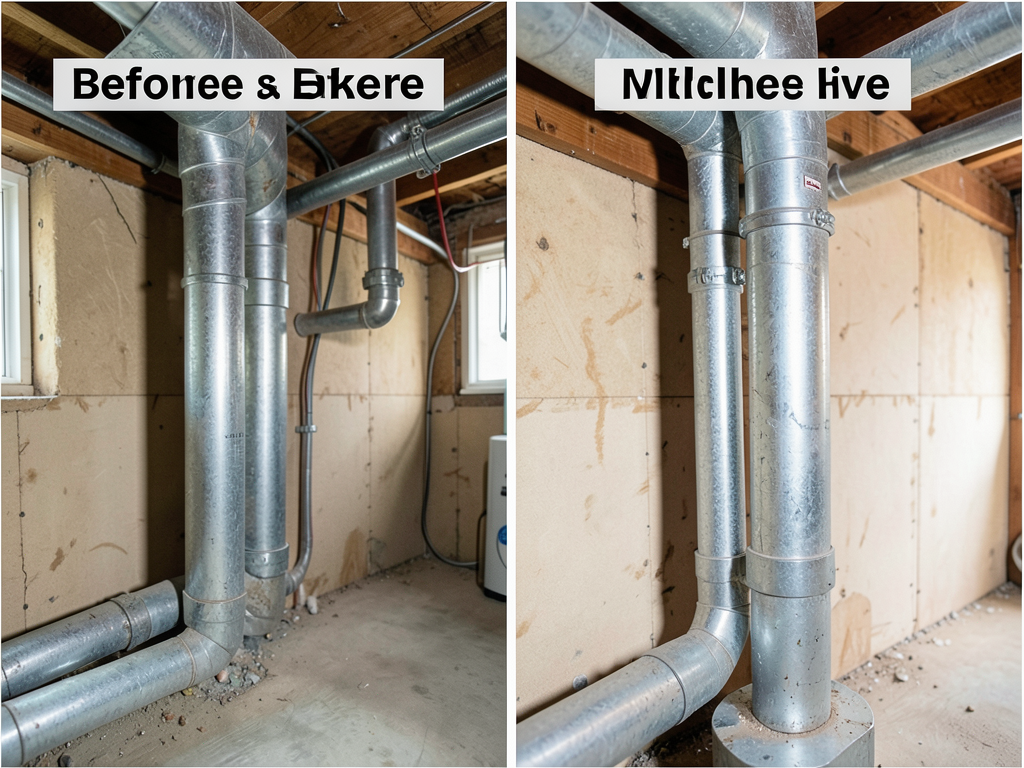
Duct modification offers a cost-effective alternative to full replacement. This approach involves replacing only the most restrictive sections of your duct system while preserving existing infrastructure where possible. For many Milwaukee homes, upgrading return air drops and adding larger supply ducts to problem areas can resolve airflow issues without extensive demolition.
High-velocity mini-duct systems provide an innovative solution for homes where traditional ductwork modification is impractical. These systems use smaller, more flexible ducts that can be routed through existing wall cavities without major construction. While the initial investment is higher, they often prove more cost-effective than extensive duct modifications in historic homes.
Smart zoning systems can help manage airflow in homes with inherent duct limitations. By installing motorized dampers and multiple thermostats, you can direct conditioned air where needed most while reducing strain on undersized duct sections. This approach works particularly well in Milwaukee’s multi-story homes where temperature variations between floors are common.
Building Code Considerations in Milwaukee
Milwaukee’s building codes have evolved to address energy efficiency and indoor air quality concerns that directly impact duct design. The Wisconsin Uniform Dwelling Code now requires specific R-values for duct insulation in unconditioned spaces, typically R-8 for supply ducts and R-6 for return ducts. These requirements ensure that conditioned air maintains temperature as it travels through your home.
Permitting requirements for duct modifications have also become more stringent. Milwaukee County requires permits for any work that alters your HVAC system’s capacity or airflow characteristics. This includes duct sealing, modifications, or complete replacements. Working with licensed contractors ensures compliance and protects your investment through proper documentation.
Energy code compliance affects duct design in several ways. Modern codes require duct tightness testing for new installations, with maximum allowable leakage rates typically set at 4% of total airflow for supply ducts and 6% for return ducts. These standards help ensure that your new high-efficiency AC unit can achieve its rated performance.
Ventilation requirements have also changed significantly. Modern building codes often require mechanical ventilation systems to maintain indoor air quality, especially in tightly sealed homes. This requirement can affect duct design, as ventilation air must be properly distributed throughout your home without creating pressure imbalances.
Making the Right Decision for Your Home
The decision to upgrade your ductwork when installing a new high-efficiency AC unit depends on several factors specific to your Milwaukee home. Home age and construction type play major roles. A 1920s bungalow in Washington Heights will have different duct challenges than a 1970s ranch in Greenfield, requiring tailored solutions rather than one-size-fits-all approaches.
Budget considerations inevitably influence the scope of work. While complete duct replacement provides the best long-term performance, many homeowners find that targeted modifications and sealing provide sufficient improvement at a fraction of the cost. A professional assessment can help you understand the cost-benefit ratio of different approaches.
Future plans for your home should factor into your decision. If you’re planning renovations or additions, it may be more cost-effective to address duct issues during construction rather than retrofitting later. Similarly, if you plan to stay in your home for many years, investing in comprehensive duct improvements can provide substantial energy savings and comfort benefits.
Environmental considerations increasingly influence HVAC decisions in Milwaukee. High-efficiency AC units paired with properly designed ducts can reduce your carbon footprint while lowering energy bills. Many homeowners find that the environmental benefits of improved efficiency justify the investment in comprehensive duct improvements.
Frequently Asked Questions
How do I know if my existing ducts are compatible with a new high-efficiency AC?
The only reliable way to determine duct compatibility is through professional testing. A qualified HVAC technician will measure static pressure, airflow, and duct leakage to assess whether your existing system can support a modern high-efficiency unit. Signs like hot spots, unusual noises, or high energy bills often indicate duct problems that require evaluation.
Can I just replace the AC unit without touching the ductwork?
While possible, this approach often leads to disappointing results. Modern high-efficiency units require specific airflow characteristics that many older duct systems cannot provide. You may experience reduced efficiency, comfort issues, and shortened equipment life. A professional assessment can help you understand the risks and potential costs of this approach.
What’s the typical cost to upgrade ductwork for a new AC?
Duct improvement costs vary widely based on your home’s specific needs. Simple sealing might cost $1,000-2,000, while comprehensive modifications could range from $3,000-8,000. Complete duct replacement in an existing home often costs $8,000-15,000 or more. The investment typically pays for itself through improved efficiency and comfort within 3-5 years.
How long does duct assessment and improvement take?
A thorough duct assessment typically requires 2-4 hours. Simple improvements like sealing might be completed in a single day, while more extensive modifications could take 2-3 days. Complete duct replacement in an existing home often requires 1-2 weeks due to the complexity of working in finished spaces.
Will new ductwork really make that much difference?
Yes. Properly designed and sealed ductwork can improve your AC’s efficiency by 20-30% while enhancing comfort and reducing noise. Many homeowners report that their new high-efficiency systems perform better than expected once duct issues are resolved, achieving energy savings and comfort levels they hadn’t anticipated.
Next Steps for Milwaukee Homeowners
Understanding whether your existing ductwork can handle a modern high-efficiency AC unit is the critical first step in any cooling system upgrade. The unique characteristics of Milwaukee’s housing stock, from historic Cream City brick homes to mid-century ranches, mean that each home requires individual assessment and planning.
Don’t let duct compatibility issues compromise your investment in high-efficiency cooling technology. A professional assessment can reveal hidden problems and provide clear recommendations for ensuring your new AC delivers the comfort and efficiency you expect. With proper planning and execution, you can enjoy the benefits of modern cooling technology while preserving the character and integrity of your Milwaukee home.
Ready to find out if your ductwork is ready for a high-efficiency upgrade? Call Elite Heating & Cooling Milwaukee at (414) 375-7888 to schedule a comprehensive duct assessment. Our experienced technicians understand the unique challenges of Milwaukee homes and can help you make informed decisions about your cooling system upgrade. For more information, visit U.S. Department of Energy AC Guide.
You may also find this helpful. Why Your Portable Backup Generator Might Not Be Enough to Run Your AC During a Summer Storm.
{
“@context”: “https://schema.org”,
“@type”: “BlogPosting”,
“headline”: “Can Your Existing Ductwork Actually Handle a Modern High Efficiency AC Unit?”,
“description”: “Wondering if your old Milwaukee home’s ducts can handle a new high-efficiency AC? Learn about static pressure, CFM, and SEER2 compatibility for Cream City homes.”,
“wordCount”: 2512,
“datePublished”: “2026-05-24T07:44:00.000Z”,
“dateModified”: “2026-05-24T07:44:00.000Z”,
“inLanguage”: “en-US”,
“mainEntityOfPage”: {
“@type”: “WebPage”,
“@id”: “https://eliteheatingandcoolingmilwaukee.com”
},
“publisher”: {
“@type”: “LocalBusiness”,
“name”: “Elite Heating and Cooling Milwaukee”,
“url”: “https://eliteheatingandcoolingmilwaukee.com”
},
“author”: {
“@type”: “Organization”,
“name”: “Elite Heating and Cooling Milwaukee”,
“url”: “https://eliteheatingandcoolingmilwaukee.com”
},
“image”: {
“@type”: “ImageObject”,
“url”: “https://eliteheatingandcoolingmilwaukee.com/wp-content/uploads/2026/03/can-your-existing-ductwork-actually-handle-a-moder-1.png”
}
}
{
“@context”: “https://schema.org”,
“@type”: “HVACBusiness”,
“name”: “Elite Heating and Cooling Milwaukee”,
“url”: “https://eliteheatingandcoolingmilwaukee.com”,
“address”: {
“@type”: “PostalAddress”,
“addressLocality”: “Milwaukee”
},
“areaServed”: {
“@type”: “City”,
“name”: “Milwaukee”
}
}
{
“@context”: “https://schema.org”,
“@type”: “FAQPage”,
“mainEntity”: [
{
“@type”: “Question”,
“name”: “How do I know if my existing ducts are compatible with a new high-efficiency AC?”,
“acceptedAnswer”: {
“@type”: “Answer”,
“text”: “The only reliable way to determine duct compatibility is through professional testing. A qualified HVAC technician will measure static pressure, airflow, and duct leakage to assess whether your existing system can support a modern high-efficiency unit. Signs like hot spots, unusual noises, or high energy bills often indicate duct problems that require evaluation.”
}
},
{
“@type”: “Question”,
“name”: “Can I just replace the AC unit without touching the ductwork?”,
“acceptedAnswer”: {
“@type”: “Answer”,
“text”: “While possible, this approach often leads to disappointing results. Modern high-efficiency units require specific airflow characteristics that many older duct systems cannot provide. You may experience reduced efficiency, comfort issues, and shortened equipment life. A professional assessment can help you understand the risks and potential costs of this approach.”
}
},
{
“@type”: “Question”,
“name”: “What’s the typical cost to upgrade ductwork for a new AC?”,
“acceptedAnswer”: {
“@type”: “Answer”,
“text”: “Duct improvement costs vary widely based on your home’s specific needs. Simple sealing might cost $1,000-2,000, while comprehensive modifications could range from $3,000-8,000. Complete duct replacement in an existing home often costs $8,000-15,000 or more. The investment typically pays for itself through improved efficiency and comfort within 3-5 years.”
}
},
{
“@type”: “Question”,
“name”: “How long does duct assessment and improvement take?”,
“acceptedAnswer”: {
“@type”: “Answer”,
“text”: “A thorough duct assessment typically requires 2-4 hours. Simple improvements like sealing might be completed in a single day, while more extensive modifications could take 2-3 days. Complete duct replacement in an existing home often requires 1-2 weeks due to the complexity of working in finished spaces.”
}
},
{
“@type”: “Question”,
“name”: “Will new ductwork really make that much difference?”,
“acceptedAnswer”: {
“@type”: “Answer”,
“text”: “Yes. Properly designed and sealed ductwork can improve your AC’s efficiency by 20-30% while enhancing comfort and reducing noise. Many homeowners report that their new high-efficiency systems perform better than expected once duct issues are resolved, achieving energy savings and comfort levels they hadn’t anticipated.”
}
}
]
}
{
“@context”: “https://schema.org”,
“@type”: “BreadcrumbList”,
“itemListElement”: [
{
“@type”: “ListItem”,
“position”: 1,
“name”: “Home”,
“item”: “https://eliteheatingandcoolingmilwaukee.com”
},
{
“@type”: “ListItem”,
“position”: 2,
“name”: “Blog”,
“item”: “https://eliteheatingandcoolingmilwaukee.com/blog”
},
{
“@type”: “ListItem”,
“position”: 3,
“name”: “Can Your Existing Ductwork Actually Handle a Modern High Efficiency AC Unit?”
}
]
}
{
“@context”: “https://schema.org”,
“@type”: “Service”,
“serviceType”: “HVAC”,
“provider”: {
“@type”: “LocalBusiness”,
“name”: “Elite Heating and Cooling Milwaukee”,
“url”: “https://eliteheatingandcoolingmilwaukee.com”
},
“areaServed”: {
“@type”: “City”,
“name”: “Milwaukee”
},
“description”: “Wondering if your old Milwaukee home’s ducts can handle a new high-efficiency AC? Learn about static pressure, CFM, and SEER2 compatibility for Cream City homes.”
}