
How Proper Attic Insulation and Ventilation Protect Your Oak Creek HVAC
Your attic works harder than you think. In Oak Creek’s extreme climate, the space above your ceiling can reach 150°F in summer and drop below freezing in winter. These temperature swings force your HVAC system to work overtime, shortening its lifespan and driving up energy bills. Proper attic insulation and ventilation create a protective barrier that keeps your heating and cooling equipment running efficiently year-round. Bay View Heat Pump Installers for Year Round Comfort and Efficiency.
Why Your Attic Temperature Matters More Than You Realize
Heat naturally rises through your home via convection. During summer months, a poorly ventilated attic becomes a heat trap. The hot air radiates downward through your ceiling, forcing your air conditioner to run longer cycles. In winter, the opposite problem occurs. Warm air from your living space escapes into the cold attic, creating moisture that leads to mold growth and ice dams along your roof edges.
The stack effect intensifies these problems in Oak Creek’s two-story homes common in neighborhoods like Drexel Town Square and Oak Park. Warm air escaping through attic bypasses creates negative pressure that pulls cold air in through your foundation. This continuous cycle makes your HVAC system work harder than necessary.
The Science Behind Attic Heat Transfer
Understanding heat transfer helps explain why attic conditions affect your HVAC performance. Heat moves through three mechanisms: conduction, convection, and radiation. Your attic experiences all three simultaneously.
Conduction occurs when heat moves through solid materials. Poor insulation allows heat to conduct through your ceiling. Convection happens when hot air rises and cold air sinks, creating air currents that carry heat. Radiation transfers heat through electromagnetic waves, which is why a hot roof radiates heat into your attic space.
In Oak Creek’s Zone 6 climate, the temperature difference between your attic and living space can exceed 70°F. This creates significant thermal stress on your HVAC system. For every 10°F increase in attic temperature, your air conditioner’s efficiency drops by approximately 2-3%.
Ice Dams: The Hidden HVAC Killer
Ice dams form when heat escapes through your attic, melting snow on your roof. The water runs down to the colder eaves and refreezes, creating a dam that backs up water under your shingles. This cycle repeats throughout Milwaukee’s long winters, causing water damage to your ceiling and walls.
The real damage happens inside your attic. As ice dams form, they trap moisture in your attic space. This moisture condenses on cold surfaces, creating the perfect environment for mold growth. The constant freeze-thaw cycle also stresses your roof structure and can damage your HVAC ductwork if it runs through the attic.
Homeowners in Oak Creek’s older neighborhoods like Caradaro Club area often have inadequate attic ventilation. These homes were built before modern building codes required proper airflow systems. The result is chronic ice dam formation that forces HVAC systems to work harder during the coldest months.
Understanding R-Value Requirements for Wisconsin
R-value measures insulation’s resistance to heat flow. The higher the R-value, the better the insulation performs. Wisconsin building codes require minimum R-values that vary by location and application. Wisconsin Department of Agriculture, Trade and Consumer Protection.
For attics in Oak Creek and surrounding Milwaukee County, the current recommendation is R-49 to R-60. This translates to approximately 16-20 inches of fiberglass batt insulation or the equivalent in blown-in cellulose. Many homes in the Drexel Town Square area were built with only R-19 insulation, which is inadequate for our climate.
The effectiveness of insulation depends on proper installation. Compression reduces R-value significantly. Gaps and voids allow heat to bypass the insulation entirely. Even small areas of missing insulation can reduce overall performance by 30% or more.
Ventilation Types and Their Role in HVAC Efficiency
Proper attic ventilation requires both intake and exhaust vents to create continuous airflow. This airflow removes hot air in summer and moisture in winter. The most effective systems use the natural stack effect, where hot air rises and exits through upper vents while cooler air enters through lower vents.
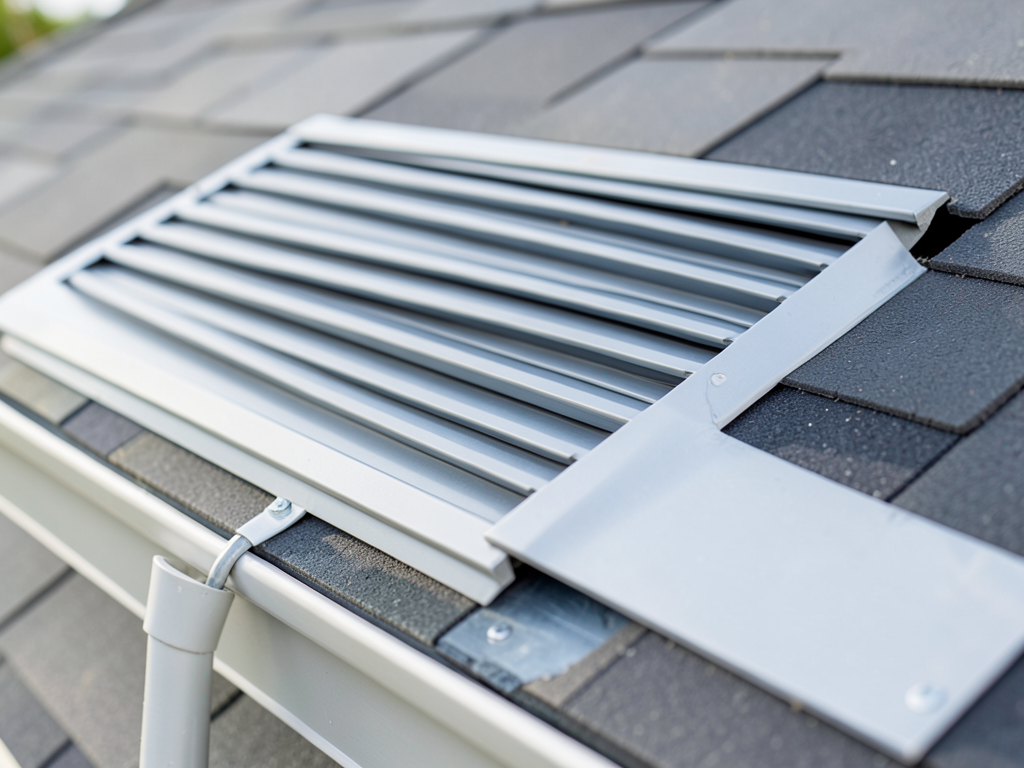
Soffit vents provide intake air at the roof’s edge. These vents should be installed along the entire soffit length and remain unobstructed by insulation. Ridge vents offer exhaust along the roof peak, creating a continuous opening that allows hot air to escape. Gable vents work as either intake or exhaust depending on wind direction.
Active ventilation systems use powered fans to move air when natural convection isn’t sufficient. These include attic fans, whole-house fans, and powered roof vents. While effective, active systems add electrical costs and require maintenance. The Most Trusted AC Maintenance Experts in West Allis.
Passive vs. Active Ventilation Comparison
| Feature | Passive Ventilation | Active Ventilation |
|---|---|---|
| Initial Cost | $300-800 | $800-2,500 |
| Operating Cost | $0 | $5-15/month |
| Maintenance | Minimal | Annual service required |
| Reliability | Weather dependent | Consistent performance |
| Noise Level | Silent | Low to moderate |
The Moisture Connection: Humidity and HVAC Performance
Milwaukee’s high humidity levels create unique challenges for attic ventilation. Summer humidity often exceeds 80%, which means your attic space can become saturated with moisture. This moisture condenses on cool surfaces, including your HVAC ductwork and equipment.
Condensation on ductwork creates several problems. First, it reduces insulation effectiveness as water fills the air pockets in insulation materials. Second, it promotes rust and corrosion on metal components. Third, it creates conditions for mold growth that can spread throughout your HVAC system.
Winter brings different moisture challenges. Warm, moist air from your living space rises into the cold attic. When this air contacts cold surfaces, it releases moisture as condensation. This process continues throughout the heating season, gradually saturating attic materials.
Calculating Your Attic Ventilation Needs
The general rule for attic ventilation is 1 square foot of net free area for every 300 square feet of attic floor space. This ratio assumes balanced intake and exhaust ventilation. For homes with complex roof designs or those in high-humidity areas, the ratio may need adjustment.
To calculate your attic area, multiply the length by the width of your home’s footprint. For a typical Oak Creek home of 2,000 square feet, you need approximately 6.5 square feet of total ventilation area. This should be split evenly between intake and exhaust vents.
Net free area accounts for the actual open space in vents after subtracting frames, screens, and louvers. A standard 16×8 inch ridge vent provides about 18 square inches of net free area. You need approximately 52 of these vents to meet minimum requirements for a 2,000 square foot attic.
Common Attic Bypass Problems in Milwaukee Homes
Attic bypasses are pathways where air and heat escape from your living space into the attic. These bypasses significantly reduce insulation effectiveness and create moisture problems. Common bypasses include plumbing vent stacks, electrical wiring holes, and gaps around chimneys.
Older homes in Oak Creek’s established neighborhoods often have numerous bypasses. Balloon framing construction, common in homes built before 1950, creates continuous cavities from basement to attic. These cavities act as chimneys, pulling warm air upward continuously.
Kitchen and bathroom exhaust fans that terminate in the attic instead of venting outside create severe moisture problems. The warm, moist air from these fans condenses on attic surfaces, leading to mold growth and wood rot. This issue is particularly common in homes built during the 1960s and 1970s.
Seasonal Maintenance Checklist for Attic Systems
Regular maintenance ensures your attic ventilation system performs optimally throughout the year. Seasonal changes in Oak Creek require different approaches to attic management.
- Spring: Check for winter damage, clean debris from vents, inspect insulation for moisture damage
- Summer: Verify fan operation, check for adequate airflow, inspect for pest intrusion
- Fall: Clear leaves from roof and gutters, check vent screens, prepare for winter moisture
- Winter: Monitor for ice dam formation, check for frost accumulation, verify attic temperature stays above freezing
Professional inspections should occur annually, ideally in late spring before summer heat arrives. These inspections identify problems before they cause system failures or energy waste. Professional Duct Cleaning for Better Air Quality in Menomonee Falls.
Energy Savings and ROI for Attic Improvements
Investing in proper attic insulation and ventilation typically pays for itself within 3-5 years through energy savings. The exact return depends on your current system efficiency, local energy rates, and climate conditions.
A typical Oak Creek home can save $200-400 annually on heating and cooling costs with proper attic improvements. These savings come from reduced HVAC runtime, lower peak demand charges, and extended equipment lifespan.
Beyond direct energy savings, proper attic systems protect your HVAC equipment from premature failure. Heat is the number one cause of compressor failure in air conditioners. By reducing attic temperatures by 20-30°F, you can extend compressor life by 3-5 years.
Professional Assessment: What to Expect
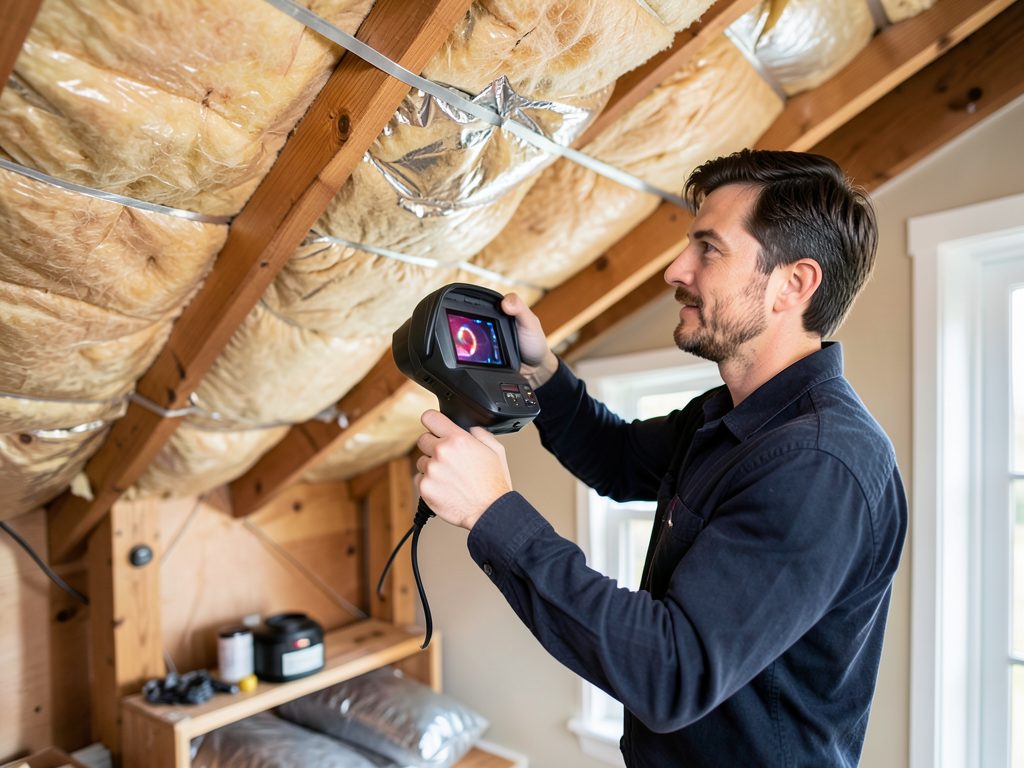
A comprehensive attic assessment examines multiple factors affecting HVAC efficiency. The evaluation includes thermal imaging to identify heat loss areas, moisture meter readings to detect water intrusion, and airflow measurements to verify ventilation effectiveness.
Technicians use specialized equipment to measure attic temperature, relative humidity, and air pressure differences. These measurements help identify problems that aren’t visible to the naked eye. For example, thermal imaging can reveal missing insulation behind walls or moisture accumulation in roof sheathing.
The assessment also evaluates your current HVAC system’s compatibility with your attic conditions. Oversized systems struggle with humidity control, while undersized systems can’t keep up with heat gain from poorly insulated attics.
Building Code Compliance and Local Requirements
Wisconsin Uniform Dwelling Code establishes minimum requirements for attic insulation and ventilation. These requirements ensure adequate energy efficiency and moisture control. Local jurisdictions may have additional requirements based on specific climate conditions.
Oak Creek falls within Milwaukee County’s jurisdiction, which follows state code with some local amendments. Recent changes require increased insulation levels and improved air sealing for new construction and major renovations.
Permit requirements vary by project scope. Simple insulation additions may not require permits, while major ventilation system installations typically do. Working with a licensed HVAC contractor ensures compliance with all applicable codes and regulations.
The Impact on Indoor Air Quality
Attic conditions directly affect your home’s indoor air quality. Poor attic ventilation allows contaminants to accumulate and potentially enter your living space. These contaminants include mold spores, dust, insulation fibers, and pest droppings.
Moisture problems in the attic create conditions for mold growth that can spread to other areas of your home. Mold spores released into the air can cause respiratory problems, allergic reactions, and other health issues. This is particularly concerning for families with asthma or allergies.
Proper attic ventilation helps maintain positive pressure in your living space, preventing contaminated attic air from being drawn into your home. This pressure differential is especially important in tightly sealed modern homes where natural air exchange is minimal.
Integration with Modern HVAC Technologies
Modern HVAC systems work best when integrated with proper attic conditions. High-efficiency furnaces and air conditioners require specific temperature and humidity ranges to operate optimally. Extreme attic conditions can cause these systems to short-cycle or run inefficiently.
Smart thermostats can monitor attic conditions and adjust HVAC operation accordingly. Some advanced systems use attic temperature sensors to optimize cooling cycles and prevent overheating. This integration can improve efficiency by 10-15% compared to standalone systems.
Variable-speed HVAC equipment particularly benefits from stable attic conditions. These systems operate most efficiently when they can run at lower speeds for extended periods. Stable attic temperatures prevent the temperature swings that cause frequent cycling.
Case Study: Typical Oak Creek Home Transformation
Consider a 1980s ranch home in the Drexel Town Square area with R-19 insulation and minimal ventilation. The homeowner experienced high summer cooling bills and ice dam formation each winter. Their HVAC system was 12 years old and struggling to maintain comfort.
After assessment, the solution included adding R-49 insulation, installing ridge and soffit vents, sealing attic bypasses, and upgrading to a high-efficiency HVAC system. The total investment was approximately $8,000.
Results included 30% reduction in cooling costs, elimination of ice dams, improved winter comfort, and extended HVAC equipment life. The homeowner recovered their investment through energy savings in just over four years.
Frequently Asked Questions
How often should attic insulation be replaced?
Attic insulation typically lasts 15-20 years under ideal conditions. However, moisture damage, pest infestation, or settling can reduce its effective lifespan. Annual inspections help identify when replacement becomes necessary. HVAC Inspection.
Can I add insulation over existing attic insulation?
Yes, you can add new insulation over existing material if the old insulation is dry and in good condition. However, you should address any moisture problems first and ensure proper ventilation exists to prevent future issues.
What’s the best insulation type for Wisconsin attics?
Blown-in cellulose and fiberglass batt insulation both work well in Wisconsin attics. Cellulose offers better air sealing and higher recycled content, while fiberglass is less expensive and easier to install in some applications.
How do I know if my attic ventilation is adequate?
Signs of inadequate ventilation include high summer attic temperatures, ice dam formation, moisture condensation on attic surfaces, and mold growth. Professional assessment using thermal imaging and airflow measurements provides definitive answers.
Will improving my attic insulation reduce my HVAC noise?
Yes, proper attic insulation can reduce HVAC noise transmission through your ceiling. The insulation absorbs sound waves from your equipment, creating a quieter living environment.
Are attic fans worth the investment?
Attic fans can be beneficial in homes with limited natural ventilation or complex roof designs. However, they add operating costs and require maintenance. Passive ventilation is often more cost-effective for properly designed attics.
How does attic ventilation affect my roof warranty?
Many roofing manufacturers require proper attic ventilation to maintain warranty coverage. Inadequate ventilation can void warranties by causing premature shingle deterioration due to excessive heat buildup.. Read more about The Best Way to Combat Excessive Dust in Your Sherman Park Home Even After Cleaning Your Ducts.
Can attic improvements help with ice dam prevention?
Yes, proper attic insulation and ventilation are the most effective long-term solutions for ice dam prevention. They keep your roof cold by preventing heat from escaping through the attic, which stops the snow melting and refreezing cycle.
What’s the connection between attic conditions and indoor humidity?
Poor attic ventilation allows moisture to accumulate and potentially enter your living space. This can increase indoor humidity levels, making your home feel uncomfortable and forcing your air conditioner to work harder to remove moisture.
How long does a professional attic assessment take?
A thorough attic assessment typically takes 2-3 hours for an average-sized home. This includes visual inspection, thermal imaging, moisture testing, and airflow measurements. Complex homes or those with suspected problems may require additional time.
Taking the Next Step
Your attic plays a crucial role in your home’s comfort and your HVAC system’s efficiency. The extreme temperature swings in Oak Creek, from summer heat waves to polar vortex winters, make proper attic insulation and ventilation essential rather than optional.
Most homeowners don’t realize how much their attic conditions affect their energy bills and HVAC performance. A professional assessment can identify problems you can’t see and recommend solutions tailored to your specific home and budget.
Don’t wait until your HVAC system fails on the coldest day of the year or your energy bills become unmanageable. The cost of preventive improvements is typically much lower than emergency repairs or system replacement.
Call Elite Heating & Cooling Milwaukee today at (414) 375-7888 to schedule your comprehensive attic and HVAC efficiency audit. Our experienced technicians understand the unique challenges of Milwaukee’s climate and can recommend solutions that protect your investment while improving your comfort.
Whether you live in the historic neighborhoods near Drexel Town Square or the newer developments around Oak Creek Parkway, we have the expertise to optimize your attic conditions for maximum HVAC efficiency. Your comfort and peace of mind are worth the investment. For more information, visit U.S. Department of Energy – Insulation Guide.