
How to Properly Winterize Your Outdoor AC Unit in Thiensville Without Damaging It
Winter in Thiensville brings heavy snow, freezing temperatures, and ice that can threaten your outdoor AC unit. Many homeowners wonder if they should cover their unit completely or leave it exposed. The truth lies somewhere in between. This guide shows you exactly how to protect your investment without causing damage from moisture or pests.
Why Milwaukee Winters Demand Special Protection
Thiensville sits in the heart of Wisconsin’s harsh winter climate. Lake Michigan creates lake-effect snow that dumps 30 to 50 inches annually on the area. Temperatures regularly drop below zero during polar vortex events. These conditions create unique challenges for outdoor HVAC equipment.
Ice dams form on roofs and gutters, sending sheets of ice crashing down. Road salt spray travels through the air and settles on equipment near streets. These factors can damage condenser coils, fan blades, and electrical components if left unprotected.
The Problem with Full Covers
Many homeowners grab a plastic cover from the hardware store and wrap their AC unit tightly. This creates several problems that can cost hundreds in repairs. EPA air conditioning maintenance guide.
Moisture becomes trapped inside the cover. When temperatures fluctuate above freezing, condensation forms on metal parts. This moisture leads to corrosion and rust on the condenser coils and electrical connections. The damage happens silently all winter long.
Rodents find covered units irresistible. Field mice and squirrels seek warm shelter during freezing weather. They chew through wiring, build nests in fan compartments, and destroy insulation. A covered unit becomes a perfect rodent hotel.
Mold and mildew grow in the dark, moist environment. These organisms can spread to evaporator coils when the system runs again in spring. The result is reduced efficiency and poor indoor air quality.
The Milwaukee Pro Method: Partial Protection
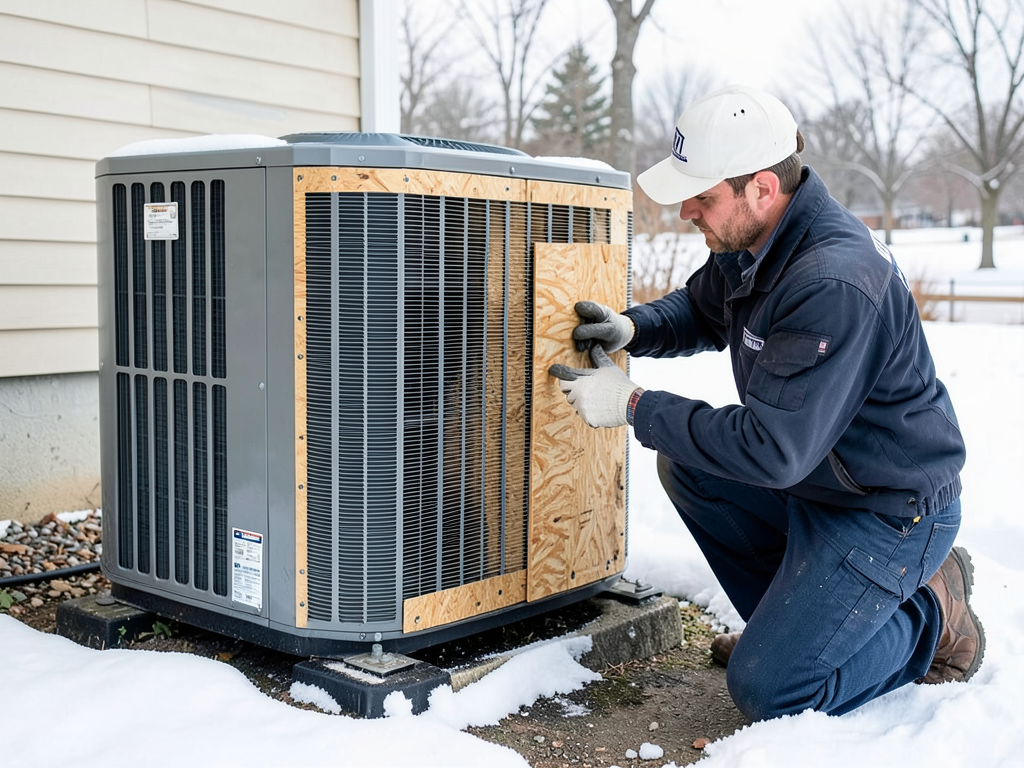
Local HVAC technicians recommend a different approach. Instead of wrapping the entire unit, place a piece of plywood on top. This protects against falling ice while allowing airflow through the sides.
The plywood should extend about six inches beyond the unit on all sides. Secure it with a brick or heavy rock to prevent wind from blowing it off. This simple method stops ice damage without trapping moisture.
For extra protection near streets, consider a breathable mesh cover that only covers the top third of the unit. This blocks salt spray while maintaining ventilation. Never use solid vinyl or plastic covers that extend below the top.
Winter Maintenance Checklist for Thiensville Homes
Before the first snowfall, complete these steps to protect your system:
- Clear the area – Remove leaves, twigs, and debris from around the base. These materials hold moisture against the unit.
- Check insulation – Examine exposed refrigerant lines. Replace any damaged foam insulation to prevent freezing.
- Turn off power – Switch off the breaker at the disconnect box near the unit. This prevents accidental startup during warm winter days.
- Inspect for damage – Look for bent fins, loose panels, or damaged wiring. Address these issues before winter sets in.
- Level the unit – Ensure the concrete pad remains level. Freezing and thawing can cause shifting that strains refrigerant lines.
Heat Pumps Need Different Treatment
If your home uses a heat pump instead of a straight AC unit, never cover it during winter. Heat pumps run year-round for both heating and cooling. Covering them blocks airflow and can cause system failure. Bay View Heat Pump Installers for Year Round Comfort and Efficiency.
Heat pumps have a defrost cycle that melts ice buildup on the coils. This process requires open airflow to work correctly. A covered heat pump can overheat, trip breakers, or suffer compressor damage.
Instead of covering, keep the area around heat pumps clear of snow and ice. Remove any icicles that form above the unit. Check that the defrost cycle activates during freezing weather.
Common Mistakes to Avoid
Many homeowners make these errors that lead to expensive repairs:
Using tarps or plastic sheeting creates condensation problems. These materials trap moisture against metal surfaces. The resulting rust can destroy a condenser coil within one winter.
Leaving the power on allows accidental startup. If someone turns on the thermostat during a warm spell, the outdoor fan can try to run while frozen. This usually destroys the fan motor.
Ignoring nearby trees creates debris problems. Falling branches or leaves can damage the unit or block airflow. Trim trees within ten feet of the equipment before winter.
Placing the cover too early traps fall debris inside. Wait until after the last leaves fall before adding any protection.
Local Climate Factors in Thiensville
Thiensville experiences specific weather patterns that affect outdoor equipment. The Milwaukee River valley creates localized wind patterns that drive snow into equipment bays. Homes near the river often need extra protection.
Historic homes in the area frequently have older AC units placed close to the house. These units need clearance for proper airflow even when protected. Never push a cover tight against the siding.
New construction in nearby Mequon and Cedarburg often places units on raised pads. This elevation helps with drainage but can make units more vulnerable to wind-driven snow.. Read more about The Right Way to Shut Down Your Furnace and Prep Your AC for a Mequon Spring.
When to Call a Professional
Some situations require expert help. Call a licensed HVAC technician if you notice:
- Refrigerant leaks or oil stains around the unit
- Damaged electrical connections or exposed wiring
- Significant rust or corrosion on coils
- Uneven concrete pads that cause unit tilting
- Strange noises during the last cooling season
Professional winterization includes checking refrigerant levels, testing electrical components, and ensuring proper drainage. This service typically costs between $75 and $150 but prevents much more expensive repairs. Professional Duct Cleaning for Better Air Quality in Menomonee Falls.
Cost Comparison: DIY vs Professional
| Service Type | Average Cost | Time Required | Risk Level |
|---|---|---|---|
| DIY Plywood Cover | $15-30 | 30 minutes | Low |
| DIY Full Cover | $40-80 | 15 minutes | High |
| Professional Winterization | $75-150 | 1-2 hours | None |
| Emergency Repairs | $200-500 | 1-3 hours | Very High |
Spring Startup Tips
When temperatures warm in April, reverse your winterization process. Remove any covers and clear debris from the unit. Check that the disconnect switch is on before attempting to start the system.
Listen for unusual noises when the unit first starts. Grinding or rattling sounds indicate problems that need professional attention. Also check for proper cooling within the first 10 minutes of operation.
Consider scheduling a spring tune-up to ensure everything works correctly after winter. This service catches small problems before they become major repairs. AC Service Germantown.
Frequently Asked Questions
Should I completely cover my AC unit in winter?
No. Complete covers trap moisture and attract rodents. Use only a piece of plywood on top for ice protection.
How do I know if my unit is a heat pump?
Heat pumps provide both heating and cooling. If your system runs during winter to heat your home, it’s a heat pump and should never be covered.
When should I remove winter protection?
Remove covers when daytime temperatures consistently stay above 50 degrees Fahrenheit, typically in late March or early April.
Can I use a cover if I have a concrete pad?
Even with a concrete pad, avoid full covers. The plywood method works best regardless of the base type.
What if icicles form above my unit?
Remove large icicles before they fall. Consider extending your roof’s ice guard or using the plywood method for extra protection.
Protect Your Investment This Winter
Proper winterization prevents expensive repairs and extends your AC unit’s lifespan. The simple plywood method costs under $30 and provides excellent protection against Milwaukee’s harsh winters.
Don’t wait until the first snowstorm. Take action now to protect your system. If you’re unsure about your unit’s condition or need professional winterization, call Elite Heating & Cooling Milwaukee at (414) 375-7888. Our NATE-certified technicians understand Thiensville’s specific climate challenges and can ensure your system survives the winter without damage.
Remember, proper preparation now prevents emergency repairs later. Your AC unit represents a significant investment in your home’s comfort. Protect it with the right winterization method this season. For more information, visit National Renewable Energy Laboratory HVAC research.
{
“@context”: “https://schema.org”,
“@type”: “BlogPosting”,
“headline”: “How to Properly Winterize Your Outdoor AC Unit in Thiensville Without Damaging It”,
“description”: “Learn expert Milwaukee HVAC tips for winterizing your outdoor AC unit. Protect against ice damage without trapping moisture or inviting pests.”,
“wordCount”: 1347,
“datePublished”: “2026-04-23T08:20:00.000Z”,
“dateModified”: “2026-04-23T08:20:00.000Z”,
“inLanguage”: “en-US”,
“mainEntityOfPage”: {
“@type”: “WebPage”,
“@id”: “https://eliteheatingandcoolingmilwaukee.com”
},
“publisher”: {
“@type”: “LocalBusiness”,
“name”: “Elite Heating and Cooling Milwaukee”,
“url”: “https://eliteheatingandcoolingmilwaukee.com”
},
“author”: {
“@type”: “Organization”,
“name”: “Elite Heating and Cooling Milwaukee”,
“url”: “https://eliteheatingandcoolingmilwaukee.com”
},
“image”: {
“@type”: “ImageObject”,
“url”: “https://eliteheatingandcoolingmilwaukee.com/wp-content/uploads/2026/03/how-to-properly-winterize-your-outdoor-ac-unit-in-1.png”
}
}
{
“@context”: “https://schema.org”,
“@type”: “HVACBusiness”,
“name”: “Elite Heating and Cooling Milwaukee”,
“url”: “https://eliteheatingandcoolingmilwaukee.com”,
“address”: {
“@type”: “PostalAddress”,
“addressLocality”: “Milwaukee”
},
“areaServed”: {
“@type”: “City”,
“name”: “Milwaukee”
}
}
{
“@context”: “https://schema.org”,
“@type”: “FAQPage”,
“mainEntity”: [
{
“@type”: “Question”,
“name”: “Should I completely cover my AC unit in winter?”,
“acceptedAnswer”: {
“@type”: “Answer”,
“text”: “No. Complete covers trap moisture and attract rodents. Use only a piece of plywood on top for ice protection.”
}
},
{
“@type”: “Question”,
“name”: “How do I know if my unit is a heat pump?”,
“acceptedAnswer”: {
“@type”: “Answer”,
“text”: “Heat pumps provide both heating and cooling. If your system runs during winter to heat your home, it’s a heat pump and should never be covered.”
}
},
{
“@type”: “Question”,
“name”: “When should I remove winter protection?”,
“acceptedAnswer”: {
“@type”: “Answer”,
“text”: “Remove covers when daytime temperatures consistently stay above 50 degrees Fahrenheit, typically in late March or early April.”
}
},
{
“@type”: “Question”,
“name”: “Can I use a cover if I have a concrete pad?”,
“acceptedAnswer”: {
“@type”: “Answer”,
“text”: “Even with a concrete pad, avoid full covers. The plywood method works best regardless of the base type.”
}
}
]
}
{
“@context”: “https://schema.org”,
“@type”: “BreadcrumbList”,
“itemListElement”: [
{
“@type”: “ListItem”,
“position”: 1,
“name”: “Home”,
“item”: “https://eliteheatingandcoolingmilwaukee.com”
},
{
“@type”: “ListItem”,
“position”: 2,
“name”: “Blog”,
“item”: “https://eliteheatingandcoolingmilwaukee.com/blog”
},
{
“@type”: “ListItem”,
“position”: 3,
“name”: “How to Properly Winterize Your Outdoor AC Unit in Thiensville Without Damaging It”
}
]
}
{
“@context”: “https://schema.org”,
“@type”: “Service”,
“serviceType”: “HVAC”,
“provider”: {
“@type”: “LocalBusiness”,
“name”: “Elite Heating and Cooling Milwaukee”,
“url”: “https://eliteheatingandcoolingmilwaukee.com”
},
“areaServed”: {
“@type”: “City”,
“name”: “Milwaukee”
},
“description”: “Learn expert Milwaukee HVAC tips for winterizing your outdoor AC unit. Protect against ice damage without trapping moisture or inviting pests.”
}