
Identifying the Source of That Musty Basement Smell in Your Older Milwaukee Home
Walking into your basement and catching that familiar musty odor can instantly make you uneasy. In Milwaukee homes, where basements are common and humidity runs high from June through September, that smell often signals more than just stale air. It can point to hidden moisture problems, mold growth, or HVAC system issues that affect your indoor air quality and even your health.
Older Milwaukee neighborhoods like Bay View and Wauwatosa frequently experience these problems due to aging infrastructure and the region’s clay-heavy soil that holds moisture against foundation walls. Before you dismiss it as harmless or reach for an air freshener, understanding the real causes can help you protect your home and family.
Why Milwaukee Basements Are Prone to Musty Smells
Milwaukee’s climate creates the perfect conditions for basement moisture issues. The city’s proximity to Lake Michigan means high dew points during summer months often exceed 70°F, pushing indoor humidity levels above 60% in many homes. Combined with the area’s clay soil that retains water and expands, this creates persistent dampness against basement walls.
Older homes in neighborhoods like Riverwest and Washington Heights often have original foundation materials like Cream City brick or limestone that are more porous than modern concrete. These materials absorb moisture from the surrounding soil, creating condensation on interior surfaces. When your HVAC system runs, it can pull this damp air through return ducts, spreading the musty smell throughout your home. Bay View Heat Pump Installers for Year Round Comfort and Efficiency.
The short but intense cooling season in Wisconsin also means air conditioning units run hard for limited periods, creating temperature differentials that cause condensation on evaporator coils and drain pans. When this moisture sits undisturbed during shoulder seasons, microbial growth begins within 24-48 hours.
Common HVAC-Related Causes of Basement Odors
Your HVAC system can be both a source and a solution for musty basement smells. Understanding how each component works helps identify the culprit.
Evaporator Coil Contamination
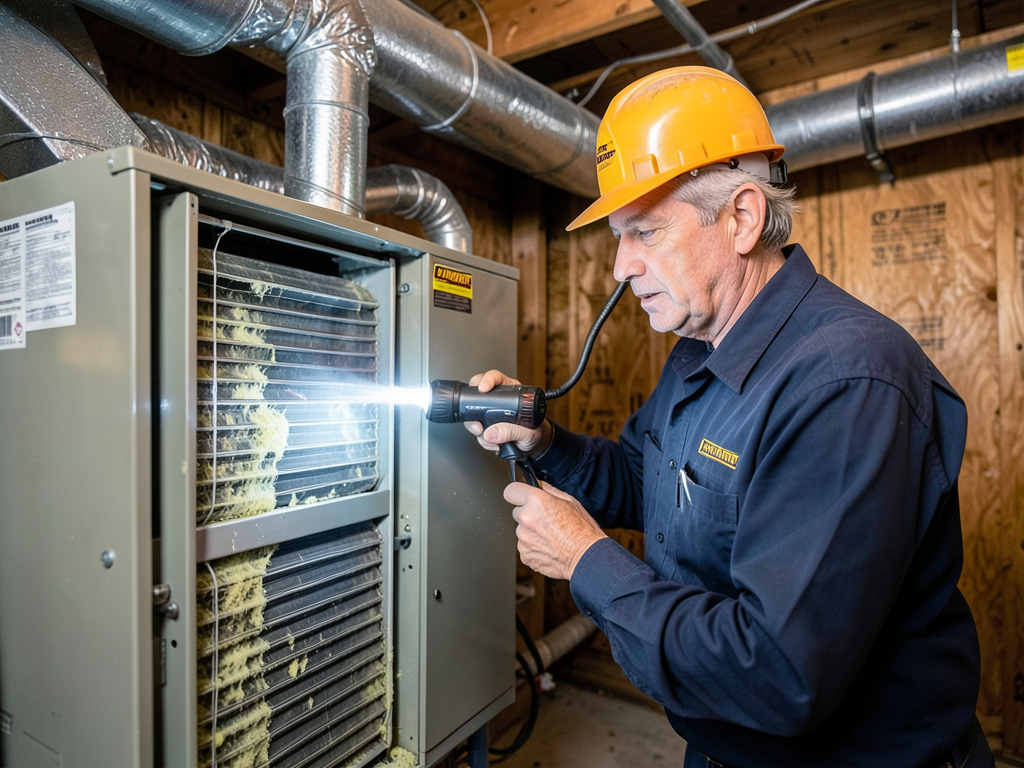
The evaporator coil sits inside your air handler and removes humidity from indoor air. When dust and organic particles collect on the coil’s surface, they create an ideal breeding ground for bacteria and mold. This condition, often called “Dirty Sock Syndrome,” produces a distinctive musty odor that intensifies when the system runs.
In Milwaukee’s humid summers, evaporator coils can develop biofilms within weeks if not properly maintained. The dark, damp environment inside the air handler provides perfect conditions for microbial growth that releases volatile organic compounds (VOCs) into your air.
Clogged Condensate Drain Lines
Your air conditioner removes significant moisture from the air, which collects in the condensate pan and drains through a dedicated line. When this line clogs with algae, dust, or mineral deposits, water backs up and creates standing moisture. This stagnant water becomes a breeding ground for bacteria and mold.
Many Milwaukee homes have HVAC systems in basements where clogged drain lines can go unnoticed for months. The backed-up water may overflow onto floors or seep into insulation, creating hidden moisture problems that perpetuate the musty smell.
Dirty Sock Syndrome Explained
This condition gets its name from the characteristic odor resembling dirty laundry or gym socks. It occurs when bacteria colonize the evaporator coil surface, particularly in systems that experience frequent cycling or operate in high-humidity environments.
The bacteria feed on organic debris collected on the coil and release waste products that create the distinctive smell. While not typically harmful in small quantities, the odor indicates conditions that could support more problematic mold growth.
Improperly Sealed Ductwork
Leaky return ducts in unconditioned basement spaces can pull in surrounding air, including musty odors from damp areas. This is especially common in older Milwaukee homes where duct sealing standards were less rigorous.
When return ducts run through damp basements or crawl spaces, they create negative pressure that draws in surrounding air through gaps and cracks. This contaminated air then circulates through your living spaces, spreading the musty smell and any associated contaminants.
Health Implications of Musty Basement Odors
While the smell itself is unpleasant, the underlying causes can pose health risks to your family. Mold spores, bacteria, and VOCs released by microbial growth can trigger various health responses.
Common symptoms include respiratory irritation, coughing, sneezing, and headaches. People with asthma or allergies may experience more severe reactions. Children and elderly family members are particularly vulnerable to indoor air quality issues.
Certain mold species common in Wisconsin basements, such as Cladosporium and Penicillium, can produce mycotoxins that may cause more serious health effects with prolonged exposure. The musty smell serves as an early warning sign that conditions exist for potentially harmful microbial growth.
Beyond immediate health effects, persistent moisture and microbial growth can damage building materials, leading to structural issues and costly repairs. The musty odor indicates conditions that could worsen over time if not addressed. EPA Indoor Air Quality.
DIY Troubleshooting Steps for Milwaukee Homeowners
Before calling a professional, several DIY steps can help identify or resolve minor issues contributing to basement odors. Professional Duct Cleaning for Better Air Quality in Menomonee Falls.
Check and Replace Air Filters
Start with the simplest solution. Dirty air filters restrict airflow and can harbor mold growth. Check your filter monthly during cooling season and replace it when visibly dirty or every 60-90 days minimum.
Use filters with MERV ratings between 8-11 for residential systems. Higher MERV ratings capture more particles but may restrict airflow in older systems. Look for filters specifically designed to capture mold spores and bacteria.
Inspect the Condensate Drain
Locate your air handler’s condensate drain line, typically a PVC pipe near the unit. Check for standing water in the drain pan and ensure the line flows freely. You can flush the line with a mixture of water and vinegar to kill algae growth.
Ensure the drain line terminates properly outside your home. In Milwaukee, drain lines should extend at least 12 inches beyond the foundation to prevent water from pooling near the basement walls.
Examine Ductwork Access Points
If accessible, inspect visible ductwork for gaps, tears, or disconnected sections. Pay special attention to joints and connections where air leakage commonly occurs. Look for signs of moisture, rust, or mold growth on duct surfaces.
Check that all vents and registers are open and unobstructed. Blocked vents can cause pressure imbalances that draw contaminated air into the system through unintended pathways.
Monitor Basement Humidity
Use a hygrometer to measure basement humidity levels. Ideal indoor humidity ranges from 30-50%. Levels consistently above 60% indicate conditions that promote mold growth and musty odors.
During Milwaukee’s humid summers, you may need to run a dehumidifier to maintain appropriate humidity levels. Empty and clean the dehumidifier regularly to prevent it from becoming a source of odors itself.
When to Call a Milwaukee HVAC Professional
While DIY steps help with minor issues, certain situations require professional expertise to resolve effectively.
Persistent Odors Despite Basic Maintenance
If you’ve replaced filters, cleaned drains, and maintained appropriate humidity but the smell persists, deeper issues likely exist. Professional technicians have specialized tools to detect hidden moisture, measure airflow, and identify contamination sources that aren’t visible to homeowners.
Professionals can also assess whether your system’s capacity matches your home’s needs. An oversized or undersized system can create conditions that promote moisture problems and musty odors.
Visible Mold or Water Damage
If you see mold growth on HVAC components, ductwork, or nearby surfaces, professional remediation becomes necessary. Attempting to clean extensive mold growth yourself can release spores throughout your home and potentially worsen the problem.
Water damage around your air handler or in nearby walls indicates leaks that require professional diagnosis and repair. These issues often involve multiple systems and components beyond simple DIY fixes.
System Performance Issues
If your system struggles to maintain comfortable temperatures, runs constantly, or produces unusual noises along with the musty smell, professional diagnosis is warranted. These symptoms can indicate mechanical problems that contribute to moisture issues and poor air quality.
Older systems in Milwaukee homes may benefit from professional cleaning and maintenance that addresses buildup accumulated over years of operation in the region’s humid climate. The Most Trusted AC Maintenance Experts in West Allis.
Professional Solutions for Eliminating Musty Odors
Milwaukee HVAC professionals offer several solutions specifically designed to address musty basement odors and prevent their recurrence.
Deep Coil Cleaning Services
Professional coil cleaning goes beyond simple surface wiping. Technicians use specialized cleaning solutions and equipment to remove biofilm, mineral deposits, and organic buildup from evaporator coils. This process eliminates the source of Dirty Sock Syndrome and prevents its recurrence.
Deep cleaning typically includes cleaning both the evaporator and condenser coils, as well as the condensate pan and surrounding components. This comprehensive approach ensures all potential sources of microbial growth are addressed.
UV Germicidal Light Installation
Ultraviolet germicidal irradiation (UVGI) systems installed near evaporator coils kill bacteria, mold, and viruses on contact. These systems use UV-C light, which destroys microorganisms’ DNA and prevents them from reproducing.
UV lights are particularly effective in Milwaukee’s humid climate, where evaporator coils remain damp for extended periods. The continuous exposure to UV light prevents biofilm formation and eliminates the conditions that cause musty odors.
Whole-Home Dehumidification Systems
Standard air conditioners remove some humidity, but dedicated whole-home dehumidifiers provide more consistent moisture control. These systems work alongside your HVAC equipment to maintain optimal humidity levels year-round.
In Milwaukee’s climate, whole-home dehumidifiers can reduce basement humidity by 10-15% even when cooling isn’t needed. This prevents the conditions that lead to musty odors and protects your home from moisture-related damage.
Duct Cleaning and Sealing
Professional duct cleaning removes accumulated dust, debris, and microbial growth from your ductwork. This process uses specialized equipment to dislodge and extract contaminants that standard cleaning can’t reach.
Following cleaning, technicians can seal duct joints and connections to prevent air leakage. This sealing process not only eliminates pathways for musty air to enter your system but also improves overall HVAC efficiency.
Preventing Future Musty Odors in Your Milwaukee Home
Prevention is always more cost-effective than remediation. Several strategies can help maintain fresh air and prevent musty odors from returning.
Regular Professional Maintenance
Schedule professional HVAC maintenance twice yearly: once before cooling season and once before heating season. These visits include comprehensive inspections, cleaning, and adjustments that prevent the conditions leading to musty odors. HVAC Inspection.
Milwaukee’s climate variations between seasons create different stress points for HVAC systems. Regular maintenance addresses these seasonal challenges before they develop into odor-causing problems.
Humidity Monitoring and Control
Install a whole-home humidistat or smart thermostat that monitors humidity levels. These devices can automatically activate dehumidification when needed, maintaining optimal conditions that prevent microbial growth.
During shoulder seasons when neither heating nor cooling is needed, standalone dehumidifiers can maintain appropriate humidity levels in basements and prevent the conditions that cause musty odors.
Foundation and Basement Maintenance
Ensure proper grading around your home’s foundation so water drains away from basement walls. Clean gutters and downspouts regularly, and extend downspout discharge at least 6 feet from the foundation.
Address any foundation cracks or gaps that allow moisture infiltration. In older Milwaukee homes, this may involve professional foundation repair or waterproofing services. AC Service Germantown.
Air Quality Monitoring
Consider installing indoor air quality monitors that track humidity, VOCs, and particulate matter. These devices provide early warning of conditions that could lead to musty odors, allowing you to address issues before they become noticeable.
Some advanced systems can integrate with smart home technology to automatically adjust HVAC operation based on air quality readings, providing proactive protection against moisture and odor problems.
Understanding Milwaukee’s Seasonal Impact on Basement Odors
Milwaukee’s distinct seasons create varying challenges for maintaining fresh basement air. Understanding these seasonal patterns helps you anticipate and prevent odor problems.
Spring brings melting snow and saturated ground, increasing moisture against foundation walls. Summer’s high humidity creates ideal conditions for microbial growth in HVAC systems. Fall’s temperature swings can cause condensation on cool surfaces. Winter’s freeze-thaw cycles can create new pathways for moisture infiltration.
Each season requires slightly different approaches to moisture and odor control. For instance, summer may demand more aggressive dehumidification, while winter might require ensuring proper ventilation to prevent stale air accumulation.
The University of Wisconsin-Extension provides regional climate data showing Milwaukee’s average July dew point exceeds 65°F, creating conditions where standard air conditioning may struggle to maintain optimal indoor humidity levels without supplemental dehumidification.
Cost Considerations for Musty Odor Solutions
Addressing musty basement odors involves various cost factors depending on the chosen solution. Understanding these costs helps you budget appropriately and prioritize interventions.
Basic maintenance like filter replacement and drain cleaning typically costs $75-200 when performed professionally. UV light installation ranges from $400-800 including equipment and labor. Whole-home dehumidifiers cost $1,500-3,500 installed, while comprehensive duct cleaning and sealing runs $500-1,500 depending on system size.
While these investments may seem significant, they often prevent more costly damage from unchecked moisture problems. The EPA estimates that addressing indoor air quality issues can reduce respiratory-related healthcare costs and improve overall quality of life for residents.
Many Milwaukee HVAC companies offer maintenance plans that spread these costs over time while ensuring regular professional attention to prevent odor-causing conditions from developing.
Frequently Asked Questions
Is a musty basement smell dangerous?
While the smell itself isn’t harmful, it indicates conditions that can support mold growth and poor indoor air quality. Prolonged exposure to mold spores and VOCs can cause respiratory issues, especially for people with allergies or asthma. The smell serves as a warning sign that moisture problems exist and should be addressed.
How can I tell if the smell is coming from my HVAC system?
If the smell intensifies when your air conditioner or furnace runs, your HVAC system is likely involved. You can test this by turning your system on and off while monitoring the odor. Also check if the smell is stronger near air vents or the air handler location. Professional testing can definitively identify if your system is the source.
How often should I have my HVAC system cleaned to prevent musty odors?
Professional maintenance should occur twice yearly in Milwaukee’s climate. Additionally, have your system professionally cleaned if you notice musty odors, visible mold growth, or performance issues. Between professional cleanings, replace filters regularly and keep drain lines clear to prevent conditions that cause odors.
Can I use air fresheners to cover up the musty smell?
Air fresheners only mask odors temporarily and don’t address underlying moisture problems. Some air fresheners contain chemicals that can worsen indoor air quality. Instead of covering odors, identify and eliminate their source through proper HVAC maintenance and moisture control.
What’s the ideal humidity level to prevent musty odors in my basement?
Maintain humidity between 30-50% in your basement. Levels above 60% create conditions favorable for mold growth and musty odors. Use a hygrometer to monitor levels, and consider a dehumidifier if humidity consistently exceeds recommended ranges, especially during Milwaukee’s humid summer months.
Take Action Against Musty Basement Odors Today
Don’t let musty basement odors compromise your home’s air quality and your family’s comfort. Whether you need professional diagnosis, deep cleaning services, or preventive maintenance, addressing these issues promptly prevents more serious problems from developing.
Elite Heating & Cooling Milwaukee serves homeowners throughout the greater Milwaukee area with expert HVAC services tailored to our region’s unique climate challenges. Our technicians understand the specific moisture and odor issues that affect older Milwaukee homes and provide solutions that work.
Contact us today at (414) 375-7888 to schedule your indoor air quality assessment. We’ll identify the source of musty odors in your basement and recommend the most effective solutions to restore fresh, clean air to your home. Your family deserves to breathe easy in every room of your Milwaukee home.
Don’t wait until minor moisture issues become major problems. Call Elite Heating & Cooling Milwaukee now and take the first step toward eliminating musty basement odors for good. For more information, visit CDC Mold Information.
{
“@context”: “https://schema.org”,
“@type”: “BlogPosting”,
“headline”: “Identifying the Source of That Musty Basement Smell in Your Older Milwaukee Home”,
“description”: “Is a musty smell in your Milwaukee basement making you worry? Discover the HVAC causes, health risks, and proven solutions to eliminate basement odors for good.”,
“wordCount”: 2663,
“datePublished”: “2026-06-18T09:31:00.000Z”,
“dateModified”: “2026-06-18T09:31:00.000Z”,
“inLanguage”: “en-US”,
“mainEntityOfPage”: {
“@type”: “WebPage”,
“@id”: “https://eliteheatingandcoolingmilwaukee.com”
},
“publisher”: {
“@type”: “LocalBusiness”,
“name”: “Elite Heating and Cooling Milwaukee”,
“url”: “https://eliteheatingandcoolingmilwaukee.com”
},
“author”: {
“@type”: “Organization”,
“name”: “Elite Heating and Cooling Milwaukee”,
“url”: “https://eliteheatingandcoolingmilwaukee.com”
},
“image”: {
“@type”: “ImageObject”,
“url”: “https://eliteheatingandcoolingmilwaukee.com/wp-content/uploads/2026/03/identifying-the-source-of-that-musty-basement-smel-1.png”
}
}
{
“@context”: “https://schema.org”,
“@type”: “HVACBusiness”,
“name”: “Elite Heating and Cooling Milwaukee”,
“url”: “https://eliteheatingandcoolingmilwaukee.com”,
“address”: {
“@type”: “PostalAddress”,
“addressLocality”: “Milwaukee”
},
“areaServed”: {
“@type”: “City”,
“name”: “Milwaukee”
}
}
{
“@context”: “https://schema.org”,
“@type”: “FAQPage”,
“mainEntity”: [
{
“@type”: “Question”,
“name”: “Is a musty basement smell dangerous?”,
“acceptedAnswer”: {
“@type”: “Answer”,
“text”: “While the smell itself isn’t harmful, it indicates conditions that can support mold growth and poor indoor air quality. Prolonged exposure to mold spores and VOCs can cause respiratory issues, especially for people with allergies or asthma. The smell serves as a warning sign that moisture problems exist and should be addressed.”
}
},
{
“@type”: “Question”,
“name”: “How can I tell if the smell is coming from my HVAC system?”,
“acceptedAnswer”: {
“@type”: “Answer”,
“text”: “If the smell intensifies when your air conditioner or furnace runs, your HVAC system is likely involved. You can test this by turning your system on and off while monitoring the odor. Also check if the smell is stronger near air vents or the air handler location. Professional testing can definitively identify if your system is the source.”
}
},
{
“@type”: “Question”,
“name”: “How often should I have my HVAC system cleaned to prevent musty odors?”,
“acceptedAnswer”: {
“@type”: “Answer”,
“text”: “Professional maintenance should occur twice yearly in Milwaukee’s climate. Additionally, have your system professionally cleaned if you notice musty odors, visible mold growth, or performance issues. Between professional cleanings, replace filters regularly and keep drain lines clear to prevent conditions that cause odors.”
}
},
{
“@type”: “Question”,
“name”: “Can I use air fresheners to cover up the musty smell?”,
“acceptedAnswer”: {
“@type”: “Answer”,
“text”: “Air fresheners only mask odors temporarily and don’t address underlying moisture problems. Some air fresheners contain chemicals that can worsen indoor air quality. Instead of covering odors, identify and eliminate their source through proper HVAC maintenance and moisture control.”
}
},
{
“@type”: “Question”,
“name”: “What’s the ideal humidity level to prevent musty odors in my basement?”,
“acceptedAnswer”: {
“@type”: “Answer”,
“text”: “Maintain humidity between 30-50% in your basement. Levels above 60% create conditions favorable for mold growth and musty odors. Use a hygrometer to monitor levels, and consider a dehumidifier if humidity consistently exceeds recommended ranges, especially during Milwaukee’s humid summer months.”
}
}
]
}
{
“@context”: “https://schema.org”,
“@type”: “BreadcrumbList”,
“itemListElement”: [
{
“@type”: “ListItem”,
“position”: 1,
“name”: “Home”,
“item”: “https://eliteheatingandcoolingmilwaukee.com”
},
{
“@type”: “ListItem”,
“position”: 2,
“name”: “Blog”,
“item”: “https://eliteheatingandcoolingmilwaukee.com/blog”
},
{
“@type”: “ListItem”,
“position”: 3,
“name”: “Identifying the Source of That Musty Basement Smell in Your Older Milwaukee Home”
}
]
}
{
“@context”: “https://schema.org”,
“@type”: “Service”,
“serviceType”: “HVAC”,
“provider”: {
“@type”: “LocalBusiness”,
“name”: “Elite Heating and Cooling Milwaukee”,
“url”: “https://eliteheatingandcoolingmilwaukee.com”
},
“areaServed”: {
“@type”: “City”,
“name”: “Milwaukee”
},
“description”: “Is a musty smell in your Milwaukee basement making you worry? Discover the HVAC causes, health risks, and proven solutions to eliminate basement odors for good.”
}