
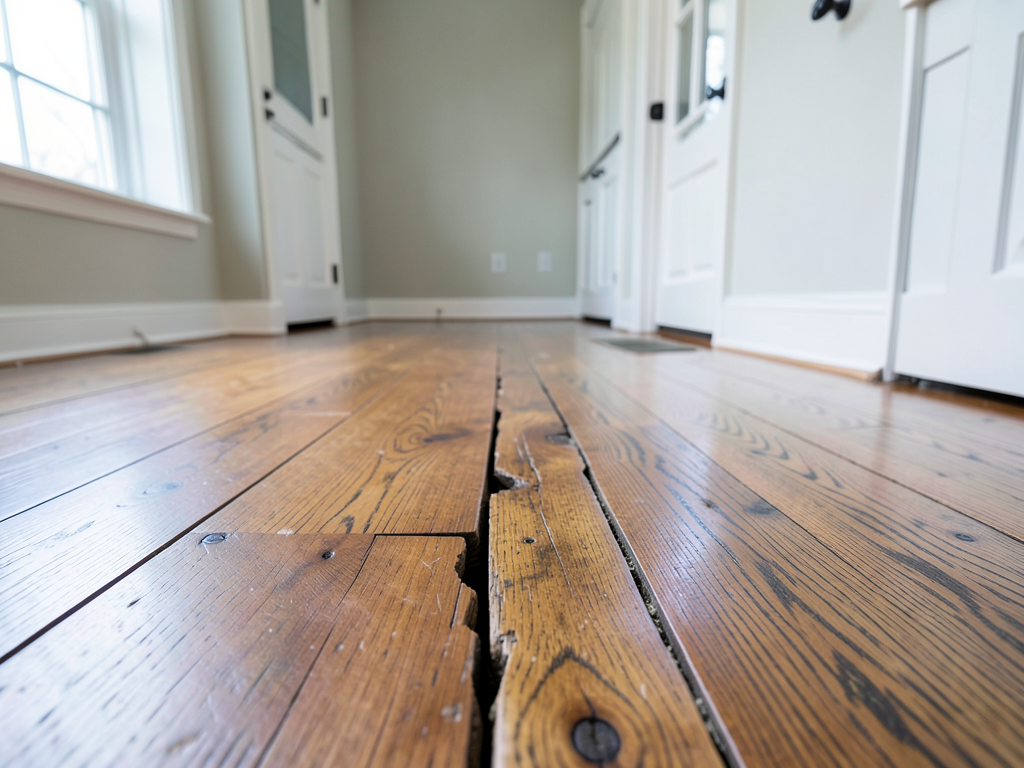
Protecting Your Expensive Hardwood Floors from Milwaukee Winter Cracking and Gapping
Your hardwood floors are a significant investment. In Milwaukee’s harsh climate they face a constant battle against humidity changes. Winter brings bone-dry air that pulls moisture from wood causing shrinkage and unsightly gaps. Summer humidity makes wood swell and cup. Understanding this cycle is the first step to protecting your floors.
Why Milwaukee Climate is Brutal on Hardwood Floors
Milwaukee sits in the Great Lakes region where humidity swings are extreme. Winter air holds very little moisture. When your furnace heats this dry air the relative humidity inside your home can drop below 15%. Summer brings the opposite problem. Lake Michigan creates high humidity that can exceed 70% indoors.
These seasonal swings cause wood to expand and contract repeatedly. Wood is hygroscopic meaning it absorbs and releases moisture from the air. This constant movement stresses the cellular structure of your flooring. Over time this leads to permanent damage.
Historic neighborhoods like the Third Ward and East Side face unique challenges. Many homes have original hardwood floors from the early 1900s. These older floors have already endured decades of expansion and contraction. Without proper humidity control they continue to deteriorate.
The ‘Golden Range’: Ideal Relative Humidity for Wood
The National Wood Flooring Association recommends maintaining indoor relative humidity between 35% and 55%. This range keeps wood stable and prevents most moisture-related problems. National Wood Flooring Association.
Wood species react differently to humidity changes. Oak which is common in Milwaukee homes is relatively stable. Maple and hickory are more sensitive to moisture changes. Exotic woods like Brazilian cherry can be extremely reactive.
Wood flooring installers measure moisture content before installation. The ideal moisture content for hardwood flooring is 6% to 9%. This matches the equilibrium moisture content at 35% to 55% relative humidity. Bay View Heat Pump Installers for Year Round Comfort and Efficiency.
Without proper humidity control your floors will never reach this stable state. They will constantly expand and contract causing stress on the wood fibers and joints.
Signs Your HVAC System is Failing Your Flooring
Cracking and gapping are obvious signs of low humidity. But other problems indicate your HVAC system needs attention.
Cupping happens when edges of boards rise higher than the center. This indicates moisture is entering the wood from below. In Milwaukee this often occurs in summer when basement humidity rises.
Crowning is the opposite problem. The center of boards rises above the edges. This happens when the wood surface dries too quickly in winter while the bottom remains moist.
Seasonal gapping is normal to some degree. But if gaps appear in winter and close completely in summer your humidity is not properly controlled.
Check for these warning signs:
- Hairline cracks appearing between boards
- Boards separating at joints
- Doors sticking in summer but loose in winter
- Cabinets or trim showing similar movement
- Static electricity shocks increasing in winter
Humidity Damage Comparison Chart
| Humidity Level | Wood Movement | Visible Damage | Prevention |
|---|---|---|---|
| Below 30% | Significant shrinkage | Large gaps cracking | Whole-home humidifier |
| 30-35% | Moderate shrinkage | Small gaps | Portable humidifier |
| 35-55% | Minimal movement | None | Balanced HVAC |
| 55-65% | Slight expansion | Minor cupping | Dehumidification |
| Above 65% | Significant expansion | Cupping crowning | Whole-home dehumidifier |
Cost of Ignoring Humidity Control
| Problem | Early Intervention Cost | Delayed Cost | Long-term Cost |
|---|---|---|---|
| Minor gapping | $300-$500 humidifier | $800-$1500 floor repair | $3000-$8000 refinishing |
| Cupping | $400-$600 dehumidifier | $1500-$3000 sanding | $5000-$12000 replacement |
| Structural damage | $500-$700 HVAC upgrade | $2500-$5000 subfloor repair | $10000+ full replacement |
Whole-Home Humidifiers vs. Portable Units
Portable humidifiers can help in small spaces but they cannot maintain consistent humidity throughout your home. They require constant refilling and cleaning. Most importantly they cannot keep up with the moisture needs of an entire house during a Wisconsin winter. Professional Duct Cleaning for Better Air Quality in Menomonee Falls.
Whole-home humidifiers connect directly to your HVAC system. They inject moisture into the air as it circulates through your home. This provides even humidity distribution to every room.
Steam humidifiers are most effective for hardwood floor protection. They produce pure steam regardless of your furnace operation. This means they work even when your furnace is not running which is critical during mild winter days.
Bypass and fan-powered humidifiers use the furnace’s heat to evaporate water. They are less expensive but less effective. They only work when your furnace is running which may not provide enough moisture during extreme cold snaps.
Whole-Home Dehumidification for Summer
Summer humidity in Milwaukee can be brutal. A whole-home dehumidifier works with your air conditioner to remove excess moisture. This prevents wood from swelling and cupping.
Portable dehumidifiers are not practical for whole-house control. They need constant emptying and cannot handle the moisture load of an entire home.
Modern whole-home dehumidifiers can remove 70 to 100 pints of water per day. They work even when your air conditioner is not running which is important during mild but humid weather.
Smart HVAC Controls for Humidity Management
Modern thermostats can monitor and control humidity. These smart controls maintain optimal humidity levels automatically.
Some advanced systems use outdoor temperature sensors to adjust indoor humidity. This prevents condensation on windows during cold weather while still protecting your floors.
Look for thermostats with built-in humidistats or those that connect to separate humidity sensors. These allow precise control of your indoor environment. EPA Indoor Air Quality Guide.
Many systems now offer remote monitoring through smartphone apps. This lets you check humidity levels even when you are away from home.
Annual Maintenance for Humidity Control
Seasonal HVAC maintenance is crucial for humidity control. Your system needs to be clean and properly calibrated to manage moisture effectively. The Most Trusted AC Maintenance Experts in West Allis.
Fall maintenance should include checking your humidifier. Clean the water panel and verify proper operation. Test the humidistat to ensure accurate readings.
Spring maintenance should focus on your air conditioner and any dehumidification equipment. Clean coils and verify proper refrigerant charge for optimal moisture removal.
Replace humidifier water panels annually. Mineral buildup reduces efficiency and can cause uneven moisture distribution.
Check ductwork for leaks. Leaky ducts can pull in humid basement air or allow conditioned air to escape reducing humidity control effectiveness.
Psychrometric Principles for Homeowners
Understanding basic psychrometrics helps you manage your home’s humidity. Relative humidity is temperature dependent. Warm air holds more moisture than cold air.
When cold outdoor air enters your home and is heated its relative humidity drops dramatically. This is why winter air feels so dry even if outdoor humidity is moderate.
Humid air feels warmer than dry air at the same temperature. This is why proper humidity control can make your home feel more comfortable at lower temperatures saving energy.
The dew point is the temperature at which air becomes saturated. Understanding dew point helps prevent condensation on windows and walls.
Milwaukee Climate Data for Humidity Planning
Milwaukee’s climate creates specific challenges for hardwood floor owners. January average relative humidity is 72% but drops to 15% indoors without humidification.
Summer months bring high dew points often exceeding 70°F. This creates conditions for mold growth and wood swelling if not properly managed.
Polar vortex events can push outdoor temperatures below -20°F. These extreme cold snaps create the driest indoor conditions requiring maximum humidification.
Late summer thunderstorms can cause sudden humidity spikes. Your system needs to respond quickly to prevent moisture damage.
Hardwood Species and Humidity Sensitivity
Different wood species have varying moisture tolerances. Oak which is common in Milwaukee homes has a dimensional change coefficient of 0.00180. This means a 5-inch wide oak board can change width by about 0.036 inches between 35% and 55% relative humidity.
Maple is more sensitive with a coefficient of 0.00263. The same board would change by about 0.053 inches.
Engineered hardwood is more dimensionally stable than solid wood. The cross-ply construction resists moisture-related movement. This makes engineered wood a good choice for areas with extreme humidity swings.
Exotic woods like teak and mahogany have natural oils that provide some moisture resistance. However they still require humidity control to prevent damage.
Installation Considerations for Humid Climates
Proper installation is crucial for humidity resistance. Wood flooring should acclimate to your home’s conditions before installation. This typically means 72 hours at normal living conditions.
Leave proper expansion gaps around room perimeters. These gaps typically equal the thickness of the flooring. For 3/4 inch hardwood leave a 3/4 inch gap covered by base molding.
Control joints may be necessary in large rooms. These allow natural expansion and contraction without causing buckling.
Underlayment choice affects moisture transmission. Some underlayments provide vapor barriers while others allow moisture movement. Choose based on your specific conditions.
Emergency Humidity Control Measures
Sometimes humidity control systems fail. Knowing emergency measures can prevent immediate damage.
If humidity drops suddenly place water basins near heat sources. This provides temporary moisture until your humidifier can be repaired.
During summer power outages use battery-powered fans to circulate air. This helps prevent moisture buildup in stagnant areas.
Keep spare humidifier parts on hand including water panels and humidistats. Quick replacement can prevent days of low humidity exposure.
Monitor humidity with a hygrometer. Early detection of problems allows faster response.
Local Building Codes and Humidity Control
Wisconsin building codes address humidity indirectly through ventilation requirements. Proper ventilation prevents moisture buildup that can damage both wood floors and building structures.
Milwaukee’s older homes often lack adequate vapor barriers. This can allow moisture migration from basements and crawl spaces affecting floor stability.
Modern construction in areas like Mequon and Brookfield typically includes better moisture management. However even new homes need active humidity control in our climate.
Check local permits for any HVAC modifications. Some whole-home humidifier installations require permits in certain Milwaukee suburbs.
Professional Assessment for Your Home
Every home has unique humidity challenges. Factors like house age, construction type, and exposure affect moisture behavior.
A professional assessment can identify problem areas. Thermal imaging can reveal air leaks that affect humidity control. Moisture meters can detect hidden water sources.
Consider your lifestyle when planning humidity control. Cooking, showering, and even houseplants affect indoor moisture levels.
Professional installation ensures your system works properly. Improper humidifier installation can cause water damage or inadequate moisture distribution.
Energy Efficiency and Humidity Control
Proper humidity control improves energy efficiency. Humid air feels warmer than dry air at the same temperature. This allows you to lower your thermostat setting saving energy.
Whole-home systems use minimal electricity compared to the energy savings from lower thermostat settings. Many homeowners report 2 to 3 degree thermostat adjustments after installing proper humidity control.
Modern high-efficiency HVAC systems often include enhanced humidity control features. These systems can maintain optimal humidity while maximizing energy savings.
Consider the total cost of ownership when evaluating humidity control systems. Energy savings often offset the initial investment within a few years.
Frequently Asked Questions
How often should I check my home’s humidity levels?
Check humidity levels weekly during extreme weather seasons. Use a digital hygrometer for accurate readings. Ideal range is 35% to 55% relative humidity.
Can I use a portable humidifier instead of a whole-home system?
Portable humidifiers work for small spaces but cannot maintain consistent whole-house humidity. They require constant maintenance and cannot keep up with the moisture needs of an entire home during Wisconsin winters.
What is the best time of year to install humidity control equipment?
Fall is ideal for humidifier installation before heating season begins. Spring works well for dehumidifier installation before summer humidity arrives. However systems can be installed any time of year.
How long does it take to notice improvements after installing humidity control?
You should notice improvements within 24 to 48 hours. Most homes reach optimal humidity within 3 to 5 days. Wood floors may take several weeks to fully stabilize.
Will humidity control eliminate all floor movement?
No system can completely eliminate natural wood movement. However proper humidity control minimizes seasonal changes keeping them within acceptable ranges that do not cause damage.
Take Action to Protect Your Investment
Your hardwood floors deserve protection from Milwaukee’s extreme climate. Proper humidity control prevents costly damage and extends the life of your flooring.
Don’t wait for gaps and cracks to appear. Contact Elite Heating & Cooling Milwaukee today for a professional humidity assessment. We serve West Allis, Mequon, Germantown and all surrounding areas. HVAC West Allis.
Our experienced technicians understand the unique challenges of Wisconsin’s climate. We offer free consultations to evaluate your home’s specific needs.
Call us now at (414) 375-7888 or visit our website to schedule your assessment. Protect your floors before winter damage occurs.
Elite Heating & Cooling Milwaukee – Your local experts in climate control and floor protection. For more information, visit National Renewable Energy Laboratory.
{
“@context”: “https://schema.org”,
“@type”: “BlogPosting”,
“headline”: “Protecting Your Expensive Hardwood Floors from Milwaukee Winter Cracking and Gapping”,
“description”: “Protect your hardwood floors from Milwaukee’s extreme humidity swings. Learn how to prevent winter cracking and summer gapping with proper HVAC humidity control.”,
“wordCount”: 2107,
“datePublished”: “2026-06-10T12:29:00.000Z”,
“dateModified”: “2026-06-10T12:29:00.000Z”,
“inLanguage”: “en-US”,
“mainEntityOfPage”: {
“@type”: “WebPage”,
“@id”: “https://eliteheatingandcoolingmilwaukee.com”
},
“publisher”: {
“@type”: “LocalBusiness”,
“name”: “Elite Heating and Cooling Milwaukee”,
“url”: “https://eliteheatingandcoolingmilwaukee.com”
},
“author”: {
“@type”: “Organization”,
“name”: “Elite Heating and Cooling Milwaukee”,
“url”: “https://eliteheatingandcoolingmilwaukee.com”
},
“image”: {
“@type”: “ImageObject”,
“url”: “https://eliteheatingandcoolingmilwaukee.com/wp-content/uploads/2026/03/protecting-your-expensive-hardwood-floors-from-mil-1.png”
}
}
{
“@context”: “https://schema.org”,
“@type”: “HVACBusiness”,
“name”: “Elite Heating and Cooling Milwaukee”,
“url”: “https://eliteheatingandcoolingmilwaukee.com”,
“address”: {
“@type”: “PostalAddress”,
“addressLocality”: “Milwaukee”
},
“areaServed”: {
“@type”: “City”,
“name”: “Milwaukee”
}
}
{
“@context”: “https://schema.org”,
“@type”: “FAQPage”,
“mainEntity”: [
{
“@type”: “Question”,
“name”: “How often should I check my home’s humidity levels?”,
“acceptedAnswer”: {
“@type”: “Answer”,
“text”: “Check humidity levels weekly during extreme weather seasons. Use a digital hygrometer for accurate readings. Ideal range is 35% to 55% relative humidity.”
}
},
{
“@type”: “Question”,
“name”: “Can I use a portable humidifier instead of a whole-home system?”,
“acceptedAnswer”: {
“@type”: “Answer”,
“text”: “Portable humidifiers work for small spaces but cannot maintain consistent whole-house humidity. They require constant maintenance and cannot keep up with the moisture needs of an entire home during Wisconsin winters.”
}
},
{
“@type”: “Question”,
“name”: “What is the best time of year to install humidity control equipment?”,
“acceptedAnswer”: {
“@type”: “Answer”,
“text”: “Fall is ideal for humidifier installation before heating season begins. Spring works well for dehumidifier installation before summer humidity arrives. However systems can be installed any time of year.”
}
},
{
“@type”: “Question”,
“name”: “How long does it take to notice improvements after installing humidity control?”,
“acceptedAnswer”: {
“@type”: “Answer”,
“text”: “You should notice improvements within 24 to 48 hours. Most homes reach optimal humidity within 3 to 5 days. Wood floors may take several weeks to fully stabilize.”
}
},
{
“@type”: “Question”,
“name”: “Will humidity control eliminate all floor movement?”,
“acceptedAnswer”: {
“@type”: “Answer”,
“text”: “No system can completely eliminate natural wood movement. However proper humidity control minimizes seasonal changes keeping them within acceptable ranges that do not cause damage.”
}
}
]
}
{
“@context”: “https://schema.org”,
“@type”: “BreadcrumbList”,
“itemListElement”: [
{
“@type”: “ListItem”,
“position”: 1,
“name”: “Home”,
“item”: “https://eliteheatingandcoolingmilwaukee.com”
},
{
“@type”: “ListItem”,
“position”: 2,
“name”: “Blog”,
“item”: “https://eliteheatingandcoolingmilwaukee.com/blog”
},
{
“@type”: “ListItem”,
“position”: 3,
“name”: “Protecting Your Expensive Hardwood Floors from Milwaukee Winter Cracking and Gapping”
}
]
}
{
“@context”: “https://schema.org”,
“@type”: “Service”,
“serviceType”: “HVAC”,
“provider”: {
“@type”: “LocalBusiness”,
“name”: “Elite Heating and Cooling Milwaukee”,
“url”: “https://eliteheatingandcoolingmilwaukee.com”
},
“areaServed”: {
“@type”: “City”,
“name”: “Milwaukee”
},
“description”: “Protect your hardwood floors from Milwaukee’s extreme humidity swings. Learn how to prevent winter cracking and summer gapping with proper HVAC humidity control.”
}