
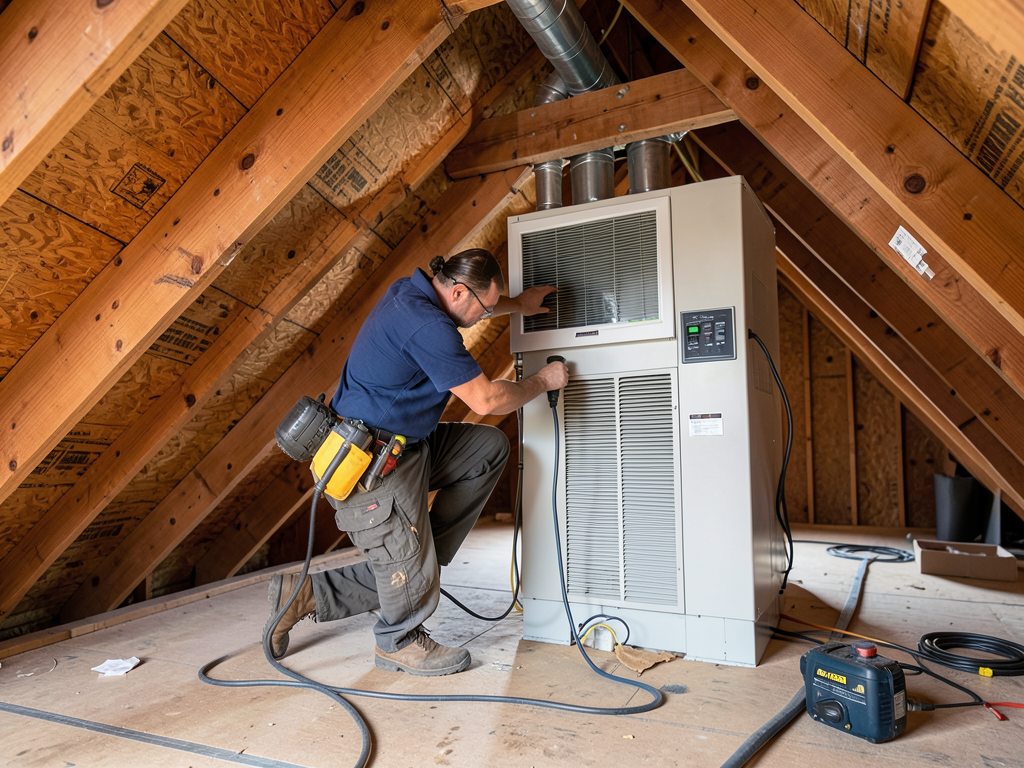
Why Your Milwaukee Attic Feels Like a Sauna in Summer and a Freezer in Winter
The third-floor attic in your Milwaukee bungalow or Victorian was probably never meant to be a year-round living space. These historic homes were built before central air conditioning was common and before energy codes required proper insulation for finished attics. That means your beautiful third-floor bedroom office or playroom often becomes the most uncomfortable room in the house. We Energies.
Milwaukee’s climate makes this problem even worse. Our summers bring high humidity and temperatures that can climb into the 90s while winters regularly drop below zero. That finished attic space becomes a heat trap in July and an ice box in January. The problem isn’t just uncomfortable—it’s also costing you money as your main HVAC system works overtime trying to condition air that immediately escapes through poorly insulated attic walls and ceilings.
The Science Behind Attic Climate Control Challenges
Attics present unique HVAC challenges that don’t exist in the main living areas of your home. Heat naturally rises so your attic already starts with a disadvantage in summer. Most historic Milwaukee homes have little to no return air ductwork in the attic which means your main system can’t effectively pull hot air out of that space.. Read more about Understanding the Dampers in Your Ductwork to Finally Fix That One Cold Room.
Insulation is another major factor. Many older Milwaukee bungalows and Victorians were built with minimal attic insulation or have had insulation that has settled over the decades. Current Wisconsin building codes require R-49 to R-60 insulation in attic spaces depending on your location. Without proper insulation your HVAC system is essentially trying to heat or cool the outdoors.
Air sealing is equally important. The knee walls in many Milwaukee attic conversions have gaps around electrical outlets, light fixtures, and where the wall meets the roofline. These small openings add up to the equivalent of leaving a window open year-round. Bay View Heat Pump Installers for Year Round Comfort and Efficiency.
Your Best Options for Attic HVAC in Milwaukee Homes
Choosing the right HVAC solution for your finished attic depends on several factors including your home’s existing system size, the attic’s square footage, your insulation levels, and your budget. Here are the most effective options Milwaukee homeowners are using today.
Ductless Mini-Split Systems: The Gold Standard for Attic Comfort
Ductless mini-split systems have become the go-to solution for attic HVAC in Milwaukee for good reason. These systems consist of an outdoor compressor unit connected to one or more indoor air handlers mounted on your attic walls or ceiling. They provide both heating and cooling without requiring any ductwork.
The benefits are significant for Milwaukee homeowners. Modern cold-climate mini-splits can operate efficiently down to -13°F which handles our winter temperatures. They offer zone control so you can set different temperatures for your attic than your main living areas. Installation is minimally invasive requiring only a small hole for the refrigerant lines.
Energy efficiency is another major advantage. Most mini-splits achieve SEER2 ratings between 18 and 24 which is significantly higher than traditional systems. This means lower utility bills from We Energies even when running the system year-round.
Extending Your Existing HVAC System
If your current furnace and air conditioner have enough capacity you might be able to extend your existing ductwork to the attic. This approach works best in homes where the attic is directly above the main living area and the furnace is located in a basement or first-floor mechanical room.
The challenge with this option is that many older Milwaukee homes have furnaces that are already working at capacity. Adding attic ductwork might require upgrading your entire system. You’ll also need to ensure proper return air pathways are established since attics typically lack the return vents needed for balanced airflow.
Building codes in Milwaukee and surrounding suburbs like Wauwatosa and Shorewood require permits for any new HVAC work. This means you’ll need professional load calculations to prove your system can handle the additional space. Professional Duct Cleaning for Better Air Quality in Menomonee Falls.
High-Efficiency Heat Pumps: Modern Technology for Wisconsin Winters
Heat pump technology has advanced significantly in recent years making these systems viable even in Milwaukee’s cold climate. Cold-climate heat pumps with Hyper-Heat technology can extract heat from outdoor air even when temperatures drop below zero.
These systems work by reversing the refrigeration cycle. In summer they remove heat from your attic and release it outside. In winter they extract heat from outdoor air and move it inside. The key advantage is that they move heat rather than generate it which makes them much more efficient than electric resistance heating.
For Milwaukee homeowners concerned about energy costs and environmental impact heat pumps offer an attractive solution. When paired with proper attic insulation they can maintain comfortable temperatures year-round while using significantly less energy than traditional electric heating.
High-Velocity HVAC Systems
High-velocity systems use small flexible ducts that can be routed through existing wall cavities without major demolition. This makes them ideal for historic Milwaukee homes where preserving original plaster walls is important.
These systems use air handlers that deliver conditioned air at higher velocities than traditional ductwork. The smaller ducts can be snaked through tight spaces making installation possible even in homes with limited mechanical room space. However high-velocity systems typically cost more to install than standard ductwork and require specialized equipment.
Understanding the Technical Requirements
Before choosing any attic HVAC solution you need to understand the technical requirements that ensure your system will work properly and meet local building codes.
Manual J Load Calculations
A Manual J load calculation is the industry standard method for determining how much heating and cooling capacity your attic needs. This calculation considers your attic’s square footage, ceiling height, insulation levels, window sizes and orientations, and local climate data.
In Milwaukee’s climate zone 6 you’ll typically need between 20 and 30 BTUs per square foot for cooling and 25 to 35 BTUs per square foot for heating. However these are just rough estimates. A proper Manual J calculation might show you need significantly more or less capacity based on your specific situation.
Wisconsin building codes require Manual J calculations for any new HVAC installation. This isn’t just bureaucracy—it ensures your system is properly sized. An oversized system will short cycle wasting energy and failing to properly dehumidify your attic in summer.
Wisconsin Uniform Dwelling Code Compliance
Any finished attic space in Wisconsin must meet specific code requirements. The Wisconsin Uniform Dwelling Code requires that all habitable spaces including finished attics have proper ventilation and meet minimum heating requirements.
For HVAC work this means your installation must comply with local mechanical codes. In Milwaukee County this typically involves permits from your local building inspector. The code also requires proper condensate drainage which can be challenging in attic installations where gravity drainage isn’t always possible.
Electrical requirements are another consideration. Attic HVAC equipment needs dedicated circuits with proper grounding. In older Milwaukee homes this might require electrical panel upgrades or new wiring runs.
Local Factors That Affect Your Attic HVAC Project
Milwaukee’s unique characteristics influence which HVAC solutions work best and how much they cost to install and operate.
Energy Costs and Rebates in Milwaukee
We Energies serves most of the Milwaukee metro area and their electric rates are among the highest in Wisconsin. This makes energy efficiency particularly important for attic HVAC systems. A system that saves 30% on energy costs can pay for itself faster in Milwaukee than in areas with cheaper electricity.
Wisconsin’s Focus on Energy program offers rebates for high-efficiency HVAC equipment. As of 2026 you can receive rebates of $300 to $1,200 for qualifying heat pumps and mini-split systems depending on their efficiency ratings. These rebates are available to homeowners in Milwaukee, Waukesha, Ozaukee, and Washington counties. Focus on Energy Wisconsin.
Federal tax credits are also available for qualifying high-efficiency HVAC equipment. The Energy Efficient Home Improvement Credit can provide up to $2,000 for qualifying heat pumps and other efficient equipment.
Milwaukee’s Housing Stock and Attic Configurations
Milwaukee’s housing stock presents specific challenges for attic HVAC. Many historic homes in neighborhoods like Bay View, Riverwest, and the East Side have finished attics with unusual configurations. Low ceiling heights, sloped walls, and limited mechanical space all affect which systems can be installed.
Cream City brick homes common in Milwaukee require special consideration. These solid masonry walls have different thermal properties than wood frame construction. They hold heat longer in summer and stay cold longer in winter which affects how your attic HVAC system needs to perform.
Many Milwaukee bungalows built in the early 1900s have knee walls that separate the finished attic space from the unconditioned attic area. These knee walls need proper insulation and air sealing to prevent energy loss regardless of which HVAC system you choose.
Permit Requirements and Local Building Practices
Milwaukee and surrounding suburbs have specific permit requirements for attic HVAC work. In the city of Milwaukee you’ll need both a mechanical permit and possibly an electrical permit depending on your installation. Suburbs like Brookfield, Greenfield, and Franklin have their own permit processes.
Local building inspectors in Milwaukee are particularly focused on condensate drainage and proper combustion air for gas-fired equipment. If you’re adding a gas furnace to your attic you’ll need to demonstrate that you have adequate combustion air supply and proper venting.
Historic districts in Milwaukee may have additional requirements. If your home is in a historic district like Sherman Park or Washington Park you might need approval from the historic preservation commission before making exterior modifications for HVAC equipment.
Cost Comparison of Attic HVAC Options
Understanding the costs involved helps you make an informed decision. Here’s how different attic HVAC options compare in terms of initial investment and operating costs.
| System Type | Initial Cost Range | Annual Operating Cost | Typical ROI Period |
|---|---|---|---|
| Ductless Mini-Split | $4,500 – $8,000 | $350 – $550 | 5-7 years |
| Extended Ductwork | $3,000 – $6,000 | $400 – $600 | 7-10 years |
| Cold-Climate Heat Pump | $6,000 – $10,000 | $300 – $500 | 4-6 years |
| High-Velocity System | $8,000 – $12,000 | $450 – $650 |
These cost estimates include equipment, installation, and basic electrical work but don’t include potential electrical panel upgrades or extensive structural modifications. Actual costs vary based on your specific home configuration and the contractor you choose.
The Importance of Whole-Home Approach
The most effective attic HVAC solutions consider your entire home as a system rather than just treating the attic as an isolated problem.
Insulation and Air Sealing First
Before investing in new HVAC equipment address your attic’s insulation and air sealing. Adding proper insulation to R-49 or higher and sealing air leaks can reduce your heating and cooling loads by 20-30%. This means you might be able to install a smaller, less expensive HVAC system.
In Milwaukee’s climate zone you should focus on both attic floor insulation and knee wall insulation if your attic has that configuration. Air sealing should target gaps around chimney penetrations, plumbing vents, and where interior and exterior walls meet.
Zone Control Systems
If you extend your existing HVAC system to the attic consider adding zone control. This allows you to heat and cool the attic independently from the rest of your home. Zone control systems use dampers in your ductwork and multiple thermostats to direct conditioned air where it’s needed.
The benefit is energy savings and improved comfort. You can keep your main living areas cooler in winter while maintaining a comfortable temperature in your attic bedroom. In summer you can avoid cooling the entire house when you’re only using the attic space.
Dehumidification Considerations
Milwaukee’s high summer humidity makes dehumidification crucial for attic comfort. Even with proper cooling you might find your attic feels clammy if humidity isn’t controlled. Some mini-split systems include built-in dehumidification modes that can remove moisture without significantly cooling the space.
For severe humidity problems you might need a dedicated whole-house dehumidifier or a system with enhanced moisture removal capabilities. This is particularly important in older homes where air leakage can introduce significant moisture from the unconditioned attic space.
Making the Right Choice for Your Milwaukee Home
Choosing the best attic HVAC solution requires balancing several factors including your budget, your home’s existing systems, and your comfort priorities.
If you have a newer home with adequate furnace capacity and good attic access extending your existing ductwork might be the most cost-effective option. However if your furnace is older or already working hard you might be better off with a separate system.
For homes with limited attic access or where preserving original architecture is important ductless mini-splits offer the best combination of performance and minimal disruption. The ability to provide both heating and cooling without major construction makes them ideal for many Milwaukee attic conversions.
Budget-conscious homeowners should consider the long-term operating costs not just the initial installation price. A more efficient system might cost more upfront but save enough on utility bills to pay for itself within a few years especially given Milwaukee’s high electricity rates.
Professional Assessment: The Critical First Step
Every attic is different and what works for your neighbor might not work for your home. The first step in any attic HVAC project should be a professional assessment that includes a Manual J load calculation and inspection of your existing systems. HVAC Inspection.
A qualified HVAC contractor will examine your attic’s configuration, measure insulation levels, check your electrical service capacity, and evaluate your existing HVAC system. They’ll also consider local factors like your neighborhood’s typical housing stock and any historic preservation requirements that might apply.
During this assessment ask about the contractor’s experience with Milwaukee-area homes similar to yours. Have they worked on bungalows in Wauwatosa or Victorians in the Historic Third Ward? Do they understand the specific challenges of Cream City brick construction? Local experience matters when it comes to attic HVAC in Milwaukee.
Frequently Asked Questions
Can I install attic HVAC myself to save money?
DIY attic HVAC installation is not recommended and may violate local building codes. HVAC work requires specialized knowledge of refrigeration, electrical systems, and building codes. Improper installation can lead to safety hazards, inefficient operation, and potential code violations that could affect your home’s resale value.
How long does attic HVAC installation typically take?
Most attic HVAC installations take between 1 and 3 days depending on the system type and your home’s configuration. Ductless mini-splits typically install faster than systems requiring new ductwork. Your contractor should provide a specific timeline after assessing your home.
Will adding attic HVAC increase my home’s value?
Yes, finished attic spaces with proper HVAC typically increase home value more than unfinished attics. Buyers in Milwaukee’s competitive market value comfortable, usable square footage. However the return on investment varies based on your specific neighborhood and the quality of the installation.
What maintenance does attic HVAC require?
Attic HVAC systems require annual professional maintenance including cleaning coils, checking refrigerant levels, and inspecting electrical connections. You should also change filters regularly and ensure the outdoor unit remains clear of debris. Mini-split systems may need condensate line cleaning to prevent clogs. The Most Trusted AC Maintenance Experts in West Allis.
Are there any rebates available for attic HVAC in Milwaukee?
Yes, Wisconsin’s Focus on Energy program offers rebates for qualifying high-efficiency HVAC equipment. Additionally federal tax credits are available for certain heat pumps and efficient systems. Your HVAC contractor can help you identify and apply for available rebates.
Take the Next Step Toward Attic Comfort
Don’t let another summer pass with your attic bedroom feeling like a sauna or another winter with freezing temperatures making that space unusable. The right attic HVAC solution can transform your third-floor space into a comfortable, year-round living area.
Elite Heating & Cooling Milwaukee has been helping homeowners throughout the Milwaukee metro area solve attic climate control problems since 2005. Our team understands the unique challenges of heating and cooling finished attics in Milwaukee’s historic homes from bungalows in West Allis to Victorians in the Historic Third Ward.
We’ll start with a comprehensive assessment including Manual J load calculations and inspection of your existing systems. Then we’ll recommend the best solution for your specific situation whether that’s a ductless mini-split, extended ductwork, or a modern heat pump system.
Call us today at (414) 375-7888 to schedule your free attic HVAC assessment. Our experienced technicians will evaluate your space and provide a detailed quote with no high-pressure sales tactics. We’re committed to finding the right solution for your home, your comfort, and your budget. Finding the Best Central Air Conditioning Installation in Brookfield.
Don’t wait until next winter or summer to solve your attic comfort problems. Contact Elite Heating & Cooling Milwaukee now and take the first step toward year-round comfort in your finished attic space.
You may also find this helpful. How Your Dream Kitchen Remodel in Brookfield Could Unintentionally Break Your Current HVAC System.
{
“@context”: “https://schema.org”,
“@type”: “BlogPosting”,
“headline”: “The Best Ways to Heat and Cool a Finished Attic in Your Historic Milwaukee Home”,
“description”: “Discover expert solutions for attic HVAC in Milwaukee bungalows and Victorians. Learn about ductless mini-splits, heat pumps, and local rebates for year-round comfort.”,
“wordCount”: 2785,
“datePublished”: “2026-06-14T13:52:00.000Z”,
“dateModified”: “2026-06-14T13:52:00.000Z”,
“inLanguage”: “en-US”,
“mainEntityOfPage”: {
“@type”: “WebPage”,
“@id”: “https://eliteheatingandcoolingmilwaukee.com”
},
“publisher”: {
“@type”: “LocalBusiness”,
“name”: “Elite Heating and Cooling Milwaukee”,
“url”: “https://eliteheatingandcoolingmilwaukee.com”
},
“author”: {
“@type”: “Organization”,
“name”: “Elite Heating and Cooling Milwaukee”,
“url”: “https://eliteheatingandcoolingmilwaukee.com”
},
“image”: {
“@type”: “ImageObject”,
“url”: “https://eliteheatingandcoolingmilwaukee.com/wp-content/uploads/2026/03/the-best-ways-to-heat-and-cool-a-finished-attic-in-1.png”
}
}
{
“@context”: “https://schema.org”,
“@type”: “HVACBusiness”,
“name”: “Elite Heating and Cooling Milwaukee”,
“url”: “https://eliteheatingandcoolingmilwaukee.com”,
“address”: {
“@type”: “PostalAddress”,
“addressLocality”: “Milwaukee”
},
“areaServed”: {
“@type”: “City”,
“name”: “Milwaukee”
}
}
{
“@context”: “https://schema.org”,
“@type”: “FAQPage”,
“mainEntity”: [
{
“@type”: “Question”,
“name”: “Can I install attic HVAC myself to save money?”,
“acceptedAnswer”: {
“@type”: “Answer”,
“text”: “DIY attic HVAC installation is not recommended and may violate local building codes. HVAC work requires specialized knowledge of refrigeration, electrical systems, and building codes. Improper installation can lead to safety hazards, inefficient operation, and potential code violations that could affect your home’s resale value.”
}
},
{
“@type”: “Question”,
“name”: “How long does attic HVAC installation typically take?”,
“acceptedAnswer”: {
“@type”: “Answer”,
“text”: “Most attic HVAC installations take between 1 and 3 days depending on the system type and your home’s configuration. Ductless mini-splits typically install faster than systems requiring new ductwork. Your contractor should provide a specific timeline after assessing your home.”
}
},
{
“@type”: “Question”,
“name”: “Will adding attic HVAC increase my home’s value?”,
“acceptedAnswer”: {
“@type”: “Answer”,
“text”: “Yes, finished attic spaces with proper HVAC typically increase home value more than unfinished attics. Buyers in Milwaukee’s competitive market value comfortable, usable square footage. However the return on investment varies based on your specific neighborhood and the quality of the installation.”
}
},
{
“@type”: “Question”,
“name”: “What maintenance does attic HVAC require?”,
“acceptedAnswer”: {
“@type”: “Answer”,
“text”: “Attic HVAC systems require annual professional maintenance including cleaning coils, checking refrigerant levels, and inspecting electrical connections. You should also change filters regularly and ensure the outdoor unit remains clear of debris. Mini-split systems may need condensate line cleaning to prevent clogs. The Most Trusted AC Maintenance Experts in West Allis.”
}
},
{
“@type”: “Question”,
“name”: “Are there any rebates available for attic HVAC in Milwaukee?”,
“acceptedAnswer”: {
“@type”: “Answer”,
“text”: “Yes, Wisconsin’s Focus on Energy program offers rebates for qualifying high-efficiency HVAC equipment. Additionally federal tax credits are available for certain heat pumps and efficient systems. Your HVAC contractor can help you identify and apply for available rebates.”
}
}
]
}
{
“@context”: “https://schema.org”,
“@type”: “BreadcrumbList”,
“itemListElement”: [
{
“@type”: “ListItem”,
“position”: 1,
“name”: “Home”,
“item”: “https://eliteheatingandcoolingmilwaukee.com”
},
{
“@type”: “ListItem”,
“position”: 2,
“name”: “Blog”,
“item”: “https://eliteheatingandcoolingmilwaukee.com/blog”
},
{
“@type”: “ListItem”,
“position”: 3,
“name”: “The Best Ways to Heat and Cool a Finished Attic in Your Historic Milwaukee Home”
}
]
}
{
“@context”: “https://schema.org”,
“@type”: “Service”,
“serviceType”: “HVAC”,
“provider”: {
“@type”: “LocalBusiness”,
“name”: “Elite Heating and Cooling Milwaukee”,
“url”: “https://eliteheatingandcoolingmilwaukee.com”
},
“areaServed”: {
“@type”: “City”,
“name”: “Milwaukee”
},
“description”: “Discover expert solutions for attic HVAC in Milwaukee bungalows and Victorians. Learn about ductless mini-splits, heat pumps, and local rebates for year-round comfort.”
}