
Why the Lake Effect Makes Your Thermostat Act So Strange in Shorewood and Whitefish Bay
Living near Lake Michigan creates a unique climate challenge that most HVAC systems weren’t designed to handle. The lake effect causes dramatic temperature swings that can leave your thermostat confused and your home uncomfortable.
Shorewood and Whitefish Bay residents experience what locals call the “cooler by the lake” phenomenon. This microclimate creates conditions where your air conditioning might run constantly on a day when inland areas like Brookfield or New Berlin stay comfortable. The lake effect isn’t just about temperature – it’s about humidity, wind patterns, and how these factors stress your HVAC system. Why Your New Berlin AC Unit Stopped Working and How to Fix It.
The problem starts with Lake Michigan’s massive thermal mass. Water heats and cools much slower than land. During spring and early summer, while inland areas warm up quickly, the lake remains cold. This creates a persistent onshore breeze that can drop temperatures by 10-15 degrees compared to neighborhoods just a few miles west.. Read more about How to Spot a Failing Furnace While You Are Touring an Open House in the North Shore.
Your thermostat senses these rapid changes and struggles to maintain consistent comfort. One minute you need heating, the next you need cooling. This constant cycling wears out components and drives up energy costs. Understanding how the lake effect impacts your HVAC system is the first step toward solving these comfort issues.
How Lake Michigan Creates Milwaukee’s Unique Cooling Pattern
Lake Michigan acts like a giant air conditioner for the Milwaukee shoreline. During spring and summer, cold lake water creates a temperature inversion where cool air sits near the surface while warmer air hovers above. This inversion drives the famous lake breeze that rushes inland when temperature differences peak.
The lake breeze typically starts mid-morning and strengthens through the afternoon. By late afternoon, this cool air can penetrate several miles inland, creating a sharp boundary between comfortable lakeside temperatures and warmer conditions in areas like Wauwatosa or Brown Deer. Your thermostat experiences this boundary as rapid temperature fluctuations.
Wind direction plays a crucial role. Northeast winds push the coolest air deepest into shore communities, while west winds can trap warm air near the lake, creating stagnant conditions. These shifting patterns mean your HVAC system faces different challenges throughout the day. Morning might require heating, afternoon cooling, and evening heating again as the lake breeze weakens.
Humidity adds another layer of complexity. Cold lake water keeps relative humidity high near the shoreline. Your air conditioner must work harder to remove this moisture, even when temperatures feel comfortable. This explains why you might feel clammy despite your thermostat showing the right temperature.
The Science Behind Lake Effect HVAC Stress
The lake effect creates specific conditions that stress HVAC components. When cold lake air meets warm inland air, it creates temperature gradients that your thermostat struggles to interpret. These gradients can be as sharp as 5-10 degrees over just a few blocks.
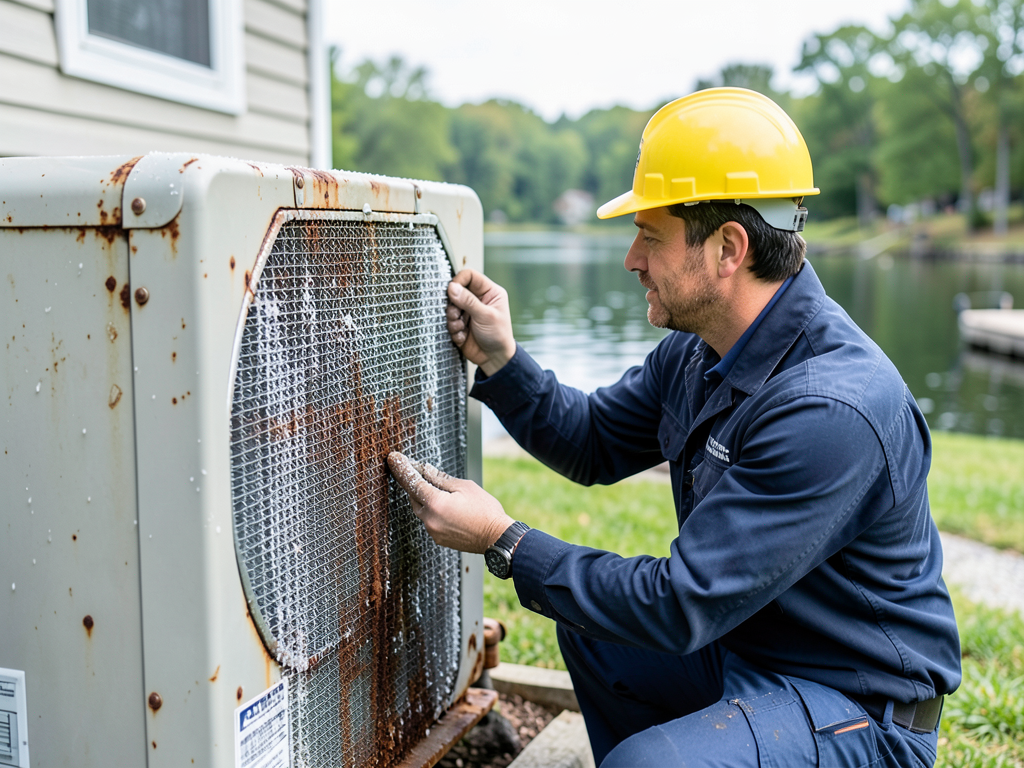
Your outdoor condenser unit faces particular challenges. Moisture from the lake increases corrosion rates on metal components. Salt and minerals in the air accelerate this process. A condenser unit in Shorewood might fail twice as fast as an identical unit in Germantown due to these environmental factors.
Indoor humidity levels near the lake often stay above 60% even on cool days. This high moisture content means your AC must run longer to achieve the same comfort level as inland homes. The system satisfies the temperature setpoint but leaves excess humidity, creating that uncomfortable “cold and clammy” feeling.
Short cycling becomes a major issue during lake effect conditions. When temperatures fluctuate rapidly, your system turns on and off frequently. This constant cycling wastes energy and accelerates wear on compressors, contactors, and motors. A system might start 30-40 times per hour during unstable lake effect weather compared to 10-15 cycles on stable days.
Common HVAC Problems in Lakefront Milwaukee Homes
Homeowners in Shorewood and Whitefish Bay report specific HVAC issues that rarely occur in inland areas. Understanding these problems helps you identify when the lake effect is stressing your system.
Thermostat confusion represents the most frequent complaint. Your thermostat might show the correct temperature but leave you feeling uncomfortable. This happens when the system satisfies the temperature setpoint but fails to remove enough humidity. The result feels like a temperature that’s slightly off even when the display reads correctly.
Condenser coil corrosion affects nearly every lakefront HVAC system. The combination of moisture, salt air, and temperature fluctuations creates perfect conditions for corrosion. You might notice reduced cooling capacity, longer run times, or complete system failure as corrosion progresses. Annual coil cleaning becomes essential rather than optional for lakefront homes. Professional Duct Cleaning for Better Air Quality in Menomonee Falls.
Sensor malfunctions increase near the lake. Outdoor temperature sensors exposed to lake breezes might read 10-15 degrees cooler than actual conditions just a few blocks inland. This discrepancy causes your system to run longer than necessary or shut off prematurely. Smart thermostats with multiple sensors often perform better in these conditions. EPA humidity control guidelines.
Moisture-related electrical issues plague lakefront HVAC systems. High humidity increases condensation on electrical components. Control boards, contactors, and wiring connections might fail prematurely. You might experience intermittent operation, error codes, or complete system shutdowns during humid periods.
Humidity Management: The Hidden Lake Effect Challenge
Humidity control becomes the dominant HVAC challenge for lakefront homeowners. The lake effect keeps outdoor dew points consistently high from late spring through early fall. Your air conditioner must remove this moisture while also cooling your home.
Standard AC systems prioritize temperature over humidity. They run until the thermostat reaches the setpoint, then shut off. This approach works inland where humidity naturally drops with temperature. Near the lake, humidity often remains high even when temperatures feel comfortable. Your home feels sticky despite the AC running.
Whole-home dehumidifiers solve this problem but add significant cost. These systems can remove 70-100 pints of moisture per day, maintaining indoor humidity between 45-55%. This range feels comfortable and prevents mold growth. The investment typically pays for itself through improved comfort and reduced AC run times.
Ventilation strategies matter more near the lake. Opening windows on cool lake breeze days might seem logical, but it introduces more moisture than cooling. Mechanical ventilation with energy recovery ventilators (ERVs) provides fresh air without the humidity penalty. These systems exchange indoor and outdoor air while transferring moisture and heat between airstreams.
Indoor air quality suffers when humidity stays high. Dust mites thrive above 50% relative humidity. Mold spores germinate when surfaces stay damp. Your HVAC system must address both temperature and air quality to create true comfort near the lake.
Optimizing Your Thermostat for Lake Effect Weather
Smart thermostat placement and programming can significantly improve comfort in lakefront homes. The key is understanding how lake effect weather differs from standard conditions and adjusting accordingly.
Thermostat location matters more near the lake. Avoid placing thermostats on exterior walls or near windows where lake breezes create false readings. Interior hallways away from direct airflow provide the most accurate measurements. Multi-sensor smart thermostats excel in these environments by averaging readings from multiple locations.
Programming strategies should account for lake effect patterns. Set wider temperature dead bands during unstable weather – perhaps 2-3 degrees instead of the standard 1 degree. This reduces short cycling during rapid temperature changes. Consider separate day and night settings that account for different lake effect intensities.
Humidity-based control offers superior comfort near the lake. Some smart thermostats include humidity sensors and can run the AC to reduce moisture even when temperature is satisfied. This approach prevents the “cold and clammy” feeling that plagues lakefront homes. The system runs longer but at lower intensity, improving efficiency.
Manual adjustments become necessary during extreme lake effect events. When a strong northeast wind pushes cool air deep inland, you might need to switch between heating and cooling multiple times per day. Learning to anticipate these changes based on wind direction and speed helps you stay ahead of comfort issues.
Maintenance Strategies for Lakefront HVAC Systems
Regular maintenance takes on new importance for homes affected by the lake effect. The harsh environment near Lake Michigan accelerates wear on HVAC components, making preventative care essential. The Most Trusted AC Maintenance Experts in West Allis.
Annual professional maintenance should include specific lakefront checks. Technicians must examine condenser coils for corrosion, clean salt and mineral deposits from outdoor units, and test electrical connections for moisture damage. These inspections catch problems before they cause system failures during extreme weather. HVAC Inspection.
Coil cleaning frequency increases near the lake. Salt and mineral deposits build up faster on condenser coils, reducing heat transfer efficiency. Quarterly cleaning might be necessary during peak cooling season. DIY coil cleaning with appropriate cleaners can extend time between professional service calls.
Filter changes become more critical in high-humidity environments. Moisture promotes mold growth in dirty filters, reducing indoor air quality. Pleated filters with antimicrobial treatment offer better performance near the lake. Change filters every 30-45 days instead of the standard 60-90 day interval.
Electrical component inspection prevents mid-season failures. High humidity increases corrosion on contactors, capacitors, and control boards. Visual inspection for discoloration or white powdery deposits indicates early corrosion. Replacement of suspect components before failure prevents emergency service calls.
Energy Efficiency in Lake Effect Conditions
Energy consumption patterns differ significantly for lakefront homes. The constant battle against high humidity and temperature fluctuations drives up utility bills even when systems run efficiently.
SEER2 ratings become more important near the lake. Higher efficiency systems handle the moisture load better while using less electricity. Variable-speed compressors excel in lake effect conditions by running longer at lower speeds to remove humidity without overcooling. The energy savings often offset the higher initial cost within 3-5 years.
Insulation and air sealing take on new importance. The temperature gradients near the lake mean your home experiences more extreme conditions than the thermostat indicates. Proper insulation prevents the cool lake air from penetrating your home’s envelope. Air sealing eliminates drafts that make you feel colder even when the thermostat reads correctly.
Smart thermostats with energy monitoring help identify waste. These devices track run times, cycle frequency, and energy consumption. You might discover your system runs 30% longer than comparable inland homes due to humidity control needs. This data helps justify efficiency upgrades or additional dehumidification.
Time-of-use utility rates affect lakefront homeowners differently. If you run your AC during peak hours to combat lake effect humidity, you might face higher costs. Shifting non-essential loads to off-peak times and using programmable thermostats to precool your home before peak rates begin can reduce bills significantly.
Comparing Lakefront vs. Inland HVAC Needs
The differences between lakefront and inland HVAC requirements become clear when examining specific performance metrics. These comparisons help homeowners understand why their systems behave differently than neighbors just a few miles away.
| Factor | Lakefront (Shorewood/Whitefish Bay) | Inland (Brookfield/New Berlin) | Impact |
|---|---|---|---|
| Average Summer Humidity | 65-75% | 55-65% | Higher latent cooling load |
| Temperature Differential | 10-15°F cooler | Standard | Increased cycling frequency |
| Corrosion Rate | 2-3x faster | Standard | More frequent component replacement |
| System Run Time | 30-40% longer | Standard | Higher energy consumption |
| Maintenance Frequency | Quarterly | Semi-annual | Increased service costs |
These differences explain why a system that works perfectly in Elm Grove might struggle in Shorewood. The lake effect creates conditions that standard HVAC design doesn’t fully address.
Smart Home Integration for Lake Effect Management
Modern smart home technology offers solutions specifically valuable for lakefront HVAC challenges. These systems can anticipate and respond to lake effect conditions more effectively than manual controls.
Weather-connected smart thermostats access real-time data about lake breezes and temperature inversions. They can automatically adjust settings when a lake breeze is detected, switching from cooling to ventilation or adjusting humidity targets. This proactive approach prevents comfort issues before they develop.
Multi-zone HVAC systems excel in lakefront homes. Different areas of your house experience varying lake effect intensity. A zone near Lake Michigan might need cooling while a zone near the Milwaukee River needs heating. Smart dampers and multiple thermostats coordinate these conflicting demands automatically.
Remote monitoring helps identify developing problems. Smart systems can alert you to unusual cycling patterns, humidity spikes, or efficiency drops. This early warning prevents minor issues from becoming major failures during extreme lake effect events when repair services are busiest.
Integration with whole-home dehumidifiers creates optimal conditions. Smart systems can activate dehumidification based on actual moisture levels rather than temperature alone. This approach maintains comfort while minimizing energy waste. Some systems learn your home’s specific response to lake effect conditions and optimize accordingly.
Future-Proofing Your Lakefront HVAC System
Climate change affects the lake effect, potentially increasing its impact on Milwaukee’s shoreline communities. Planning for these changes helps ensure long-term comfort and efficiency.
Warmer lake temperatures could intensify the lake effect. If Lake Michigan warms faster than the surrounding land, temperature inversions might become more frequent and pronounced. Your HVAC system needs excess capacity to handle these potential extremes. Oversizing by 15-20% provides insurance against future conditions. Bay View Heat Pump Installers for Year Round Comfort and Efficiency.
Humidity trends show increases in many Great Lakes regions. Higher baseline moisture levels mean your system must work harder every year. Investing in higher capacity dehumidification now prevents comfort issues as conditions worsen. Heat pump water heaters that also dehumidify offer dual benefits in lakefront homes.
Smart grid integration helps manage peak demand. As lake effect conditions drive up cooling loads, utilities might implement demand response programs. Systems that can automatically adjust during peak events reduce costs and prevent grid strain. Time-of-use optimization becomes more valuable as climate impacts intensify.
Resilient design principles improve system longevity. Corrosion-resistant materials, elevated equipment pads to prevent flooding, and backup power options protect your investment. These features cost more initially but reduce lifetime ownership costs in the harsh lakefront environment.
When to Call a Professional About Lake Effect Issues
Recognizing when DIY troubleshooting isn’t enough saves time and prevents further damage. Certain symptoms indicate professional intervention is necessary for lakefront HVAC systems.
Constant short cycling often signals deeper problems. If your system turns on and off more than 10-12 times per hour during stable weather, something’s wrong. This might indicate thermostat issues, refrigerant problems, or control board malfunctions. Professional diagnosis prevents component damage from excessive cycling.
Humidity levels above 60% even when the AC runs constantly require expert attention. Your system might be properly sized for temperature but undersized for humidity removal. A professional can assess whether additional dehumidification or system replacement makes economic sense.
Unusual noises during lake breeze events suggest developing problems. Clicking, buzzing, or rattling sounds when temperatures fluctuate rapidly might indicate loose components or electrical issues aggravated by moisture. Early intervention prevents catastrophic failures during extreme weather.
Energy bills increasing 30% or more without obvious cause often relate to lake effect inefficiencies. A professional energy audit can identify whether your system struggles with the specific challenges of your location. Sometimes simple adjustments or maintenance resolve issues that seem to require expensive upgrades.
Frequently Asked Questions
Why does my AC run constantly even when it’s cool outside near the lake?
Your system likely struggles with high humidity rather than temperature. Lake Michigan keeps outdoor dew points high, forcing your AC to run longer to remove moisture. The temperature might be comfortable, but the humidity makes you feel warm. A whole-home dehumidifier can solve this by handling moisture separately from cooling.
How often should I service my HVAC system in Shorewood compared to inland areas?
Lakefront systems need professional service twice yearly instead of annually. The harsh environment accelerates wear on components. Quarterly DIY maintenance like coil cleaning and filter changes helps, but professional inspection catches issues specific to lake effect conditions like corrosion and moisture damage.
Can I use a regular thermostat near the lake, or do I need something special?
Standard thermostats work but smart thermostats with humidity sensing and multiple sensors perform better. The lake effect creates conditions where temperature alone doesn’t indicate comfort. Smart thermostats can run the system based on humidity levels, preventing the “cold and clammy” feeling common in lakefront homes.
Will a more efficient AC system solve my lake effect comfort problems?
Higher efficiency helps but doesn’t eliminate lake effect challenges. Variable-speed systems handle humidity better than single-stage units, but the fundamental issue is the moisture load from the lake. Combining efficiency upgrades with dedicated dehumidification provides the best results for lakefront comfort.
How much longer do HVAC systems typically last near Lake Michigan?
Expect 2-3 years shorter lifespan for outdoor components near the lake due to corrosion. Indoor components might last the standard 15-20 years. Regular maintenance can minimize this reduction, but the harsh environment eventually takes its toll on metal parts exposed to moisture and salt air.
Should I close vents in rooms that get too cool from the lake breeze?
No, closing vents creates pressure imbalances that stress your system. Instead, use ceiling fans to distribute cool air more evenly or consider a zoning system that allows different temperatures in different areas. Zoning costs more initially but provides better comfort and efficiency than vent manipulation.
What’s the best time of year to replace my lakefront HVAC system?
Late spring or early fall offers ideal replacement timing. These shoulder seasons provide mild weather while avoiding peak demand periods. You’ll have more scheduling flexibility and potentially better pricing than during extreme summer or winter conditions when lake effect stress is highest.
How do I know if my thermostat is reading correctly near the lake?
Place a separate digital thermometer away from direct airflow and compare readings over several days. If differences exceed 2-3 degrees, your thermostat might be affected by lake breezes or poor placement. Smart thermostats with remote sensors provide more accurate readings in challenging lakefront environments.
- Assess Your Current System
Check run times, humidity levels, and comfort issues. Note if problems worsen during specific wind conditions or times of day. This baseline helps identify whether you need simple adjustments or major upgrades.
- Improve Home Envelope
Seal air leaks, especially on the lake-facing side of your home. Add insulation where needed. These improvements reduce the workload on your HVAC system by minimizing the impact of rapid temperature changes.
- Upgrade Thermostat Strategy
Install a smart thermostat with humidity sensing and multiple sensors. Program wider temperature dead bands to reduce short cycling. Consider separate settings for different wind conditions common in your area.
- Implement Moisture Control
Add a whole-home dehumidifier if humidity stays above 55% regularly. Clean condenser coils quarterly to maintain efficiency. Consider UV lights in your ductwork to prevent mold growth in the high-moisture environment.
- Establish Professional Maintenance
Schedule bi-annual professional service with emphasis on corrosion prevention and electrical connection inspection. Develop a relationship with a technician familiar with lake effect challenges specific to your neighborhood.
Take Control of Your Lakefront Comfort Today
Living near Lake Michigan offers incredible benefits, but it also creates unique HVAC challenges that standard systems struggle to handle. The lake effect’s impact on temperature, humidity, and system longevity requires specialized knowledge and equipment to manage effectively.
Don’t let your thermostat’s confusion ruin your comfort or drive up your energy bills. Understanding how the lake effect affects your HVAC system is the first step toward solving these problems. Whether you need better humidity control, corrosion-resistant equipment, or smart thermostat optimization, the right solutions exist for your specific situation.
Elite Heating & Cooling Milwaukee has served lakefront communities for over 15 years. Our technicians understand the unique challenges Shorewood and Whitefish Bay homeowners face. We don’t just install equipment – we design systems that work specifically for your microclimate.
Ready to stop fighting with your thermostat? Call us today at (414) 375-7888 for a comprehensive evaluation of your lakefront HVAC system. We’ll identify exactly how the lake effect impacts your home and recommend solutions that provide real comfort and efficiency improvements.
Don’t wait for another uncomfortable summer or unexpected system failure. The sooner you address lake effect challenges, the more comfortable and efficient your home will be. Call now and take the first step toward perfect comfort in your lakefront home. For more information, visit NREL HVAC efficiency research.
{
“@context”: “https://schema.org”,
“@type”: “BlogPosting”,
“headline”: “Why the Lake Effect Makes Your Thermostat Act So Strange in Shorewood and Whitefish Bay”,
“description”: “Discover why Shorewood and Whitefish Bay homeowners experience erratic thermostat behavior due to Lake Michigan’s cooling effect and how to optimize your HVAC system.”,
“wordCount”: 3349,
“datePublished”: “2026-06-09T09:21:00.000Z”,
“dateModified”: “2026-06-09T09:21:00.000Z”,
“inLanguage”: “en-US”,
“mainEntityOfPage”: {
“@type”: “WebPage”,
“@id”: “https://eliteheatingandcoolingmilwaukee.com”
},
“publisher”: {
“@type”: “LocalBusiness”,
“name”: “Elite Heating and Cooling Milwaukee”,
“url”: “https://eliteheatingandcoolingmilwaukee.com”
},
“author”: {
“@type”: “Organization”,
“name”: “Elite Heating and Cooling Milwaukee”,
“url”: “https://eliteheatingandcoolingmilwaukee.com”
},
“image”: {
“@type”: “ImageObject”,
“url”: “https://eliteheatingandcoolingmilwaukee.com/wp-content/uploads/2026/03/why-the-lake-effect-makes-your-thermostat-act-so-s-1.png”
}
}
{
“@context”: “https://schema.org”,
“@type”: “HVACBusiness”,
“name”: “Elite Heating and Cooling Milwaukee”,
“url”: “https://eliteheatingandcoolingmilwaukee.com”,
“address”: {
“@type”: “PostalAddress”,
“addressLocality”: “Milwaukee”
},
“areaServed”: {
“@type”: “City”,
“name”: “Milwaukee”
}
}
{
“@context”: “https://schema.org”,
“@type”: “FAQPage”,
“mainEntity”: [
{
“@type”: “Question”,
“name”: “Why does my AC run constantly even when it’s cool outside near the lake?”,
“acceptedAnswer”: {
“@type”: “Answer”,
“text”: “Your system likely struggles with high humidity rather than temperature. Lake Michigan keeps outdoor dew points high, forcing your AC to run longer to remove moisture. The temperature might be comfortable, but the humidity makes you feel warm. A whole-home dehumidifier can solve this by handling moisture separately from cooling.”
}
},
{
“@type”: “Question”,
“name”: “How often should I service my HVAC system in Shorewood compared to inland areas?”,
“acceptedAnswer”: {
“@type”: “Answer”,
“text”: “Lakefront systems need professional service twice yearly instead of annually. The harsh environment accelerates wear on components. Quarterly DIY maintenance like coil cleaning and filter changes helps, but professional inspection catches issues specific to lake effect conditions like corrosion and moisture damage.”
}
},
{
“@type”: “Question”,
“name”: “Can I use a regular thermostat near the lake, or do I need something special?”,
“acceptedAnswer”: {
“@type”: “Answer”,
“text”: “Standard thermostats work but smart thermostats with humidity sensing and multiple sensors perform better. The lake effect creates conditions where temperature alone doesn’t indicate comfort. Smart thermostats can run the system based on humidity levels, preventing the \”cold and clammy\” feeling common in lakefront homes.”
}
},
{
“@type”: “Question”,
“name”: “Will a more efficient AC system solve my lake effect comfort problems?”,
“acceptedAnswer”: {
“@type”: “Answer”,
“text”: “Higher efficiency helps but doesn’t eliminate lake effect challenges. Variable-speed systems handle humidity better than single-stage units, but the fundamental issue is the moisture load from the lake. Combining efficiency upgrades with dedicated dehumidification provides the best results for lakefront comfort.”
}
},
{
“@type”: “Question”,
“name”: “How much longer do HVAC systems typically last near Lake Michigan?”,
“acceptedAnswer”: {
“@type”: “Answer”,
“text”: “Expect 2-3 years shorter lifespan for outdoor components near the lake due to corrosion. Indoor components might last the standard 15-20 years. Regular maintenance can minimize this reduction, but the harsh environment eventually takes its toll on metal parts exposed to moisture and salt air.”
}
},
{
“@type”: “Question”,
“name”: “Should I close vents in rooms that get too cool from the lake breeze?”,
“acceptedAnswer”: {
“@type”: “Answer”,
“text”: “No, closing vents creates pressure imbalances that stress your system. Instead, use ceiling fans to distribute cool air more evenly or consider a zoning system that allows different temperatures in different areas. Zoning costs more initially but provides better comfort and efficiency than vent manipulation.”
}
},
{
“@type”: “Question”,
“name”: “What’s the best time of year to replace my lakefront HVAC system?”,
“acceptedAnswer”: {
“@type”: “Answer”,
“text”: “Late spring or early fall offers ideal replacement timing. These shoulder seasons provide mild weather while avoiding peak demand periods. You’ll have more scheduling flexibility and potentially better pricing than during extreme summer or winter conditions when lake effect stress is highest.”
}
}
]
}
{
“@context”: “https://schema.org”,
“@type”: “HowTo”,
“name”: “How to Optimize Your Lakefront HVAC System”,
“step”: [
{
“@type”: “HowToStep”,
“position”: 1,
“name”: “Assess Your Current System”,
“text”: “Check run times, humidity levels, and comfort issues. Note if problems worsen during specific wind conditions or times of day. This baseline helps identify whether you need simple adjustments or major upgrades.”
},
{
“@type”: “HowToStep”,
“position”: 2,
“name”: “Improve Home Envelope”,
“text”: “Seal air leaks, especially on the lake-facing side of your home. Add insulation where needed. These improvements reduce the workload on your HVAC system by minimizing the impact of rapid temperature changes.”
},
{
“@type”: “HowToStep”,
“position”: 3,
“name”: “Upgrade Thermostat Strategy”,
“text”: “Install a smart thermostat with humidity sensing and multiple sensors. Program wider temperature dead bands to reduce short cycling. Consider separate settings for different wind conditions common in your area.”
},
{
“@type”: “HowToStep”,
“position”: 4,
“name”: “Implement Moisture Control”,
“text”: “Add a whole-home dehumidifier if humidity stays above 55% regularly. Clean condenser coils quarterly to maintain efficiency. Consider UV lights in your ductwork to prevent mold growth in the high-moisture environment.”
},
{
“@type”: “HowToStep”,
“position”: 5,
“name”: “Establish Professional Maintenance”,
“text”: “Schedule bi-annual professional service with emphasis on corrosion prevention and electrical connection inspection. Develop a relationship with a technician familiar with lake effect challenges specific to your neighborhood.”
}
],
“image”: “https://eliteheatingandcoolingmilwaukee.com/wp-content/uploads/2026/03/why-the-lake-effect-makes-your-thermostat-act-so-s-1.png”
}
{
“@context”: “https://schema.org”,
“@type”: “BreadcrumbList”,
“itemListElement”: [
{
“@type”: “ListItem”,
“position”: 1,
“name”: “Home”,
“item”: “https://eliteheatingandcoolingmilwaukee.com”
},
{
“@type”: “ListItem”,
“position”: 2,
“name”: “Blog”,
“item”: “https://eliteheatingandcoolingmilwaukee.com/blog”
},
{
“@type”: “ListItem”,
“position”: 3,
“name”: “Why the Lake Effect Makes Your Thermostat Act So Strange in Shorewood and Whitefish Bay”
}
]
}
{
“@context”: “https://schema.org”,
“@type”: “Service”,
“serviceType”: “HVAC”,
“provider”: {
“@type”: “LocalBusiness”,
“name”: “Elite Heating and Cooling Milwaukee”,
“url”: “https://eliteheatingandcoolingmilwaukee.com”
},
“areaServed”: {
“@type”: “City”,
“name”: “Milwaukee”
},
“description”: “Discover why Shorewood and Whitefish Bay homeowners experience erratic thermostat behavior due to Lake Michigan’s cooling effect and how to optimize your HVAC system.”
}